History faculty contribute to new volume on entanglements among empires in the 17th century
Two Department of History faculty have made significant contributions to a newly published book that explores the entanglements among Spain, Portugal, and the Dutch Republic during the seventeenth century from a global perspective.
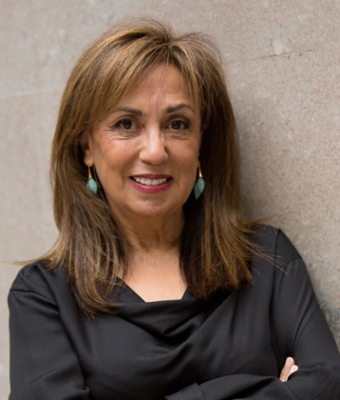 Associate Professor Silvia Mitchell is co-editor and contributing author of the new volume, Ibero-Dutch Imperial Entanglements in the Seventeenth Century: Geopolitical Shifts in Global Perspective, published by Palgrave MacMillan. In addition to her role as editor, Dr. Mitchell authored the introductory essay, “The Iberian Monarchies of Spain and Portugal and the Dutch Republic in a Century of Change” as well as a chapter on “Spanish-Dutch Collaboration under Mariana of Austria, 1665-1675: Shifting Diplomatic and Military Alliances,” discussing the geopolitical consequences of a new era of collaboration between the Spanish Monarchy and the United Provinces.
“The volume is the first of its kind to bring the tangled histories of the Iberian monarchies of Spain and Portugal and the Dutch Republic together from dynastic, political, and global perspectives,” explains Dr. Mitchell. “It counters the notion of decline associated with the three empires, foregrounding their adaptability, with the corresponding implications for global history in early modernity.”
Dr. Mitchell currently has several book projects, including a history of “The Spanish Habsburgs (1500-1700): The Men and the Women who Ruled the First Global Empire.”
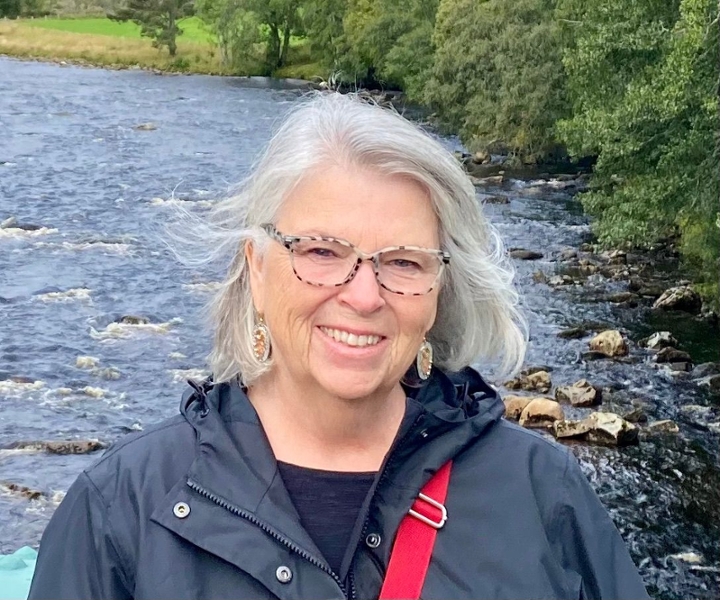 Associate Professor Dawn Marsh authored the chapter titled, “Concurrent Sovereignties on the Lenapewihittuck: 1615–1638.” The chapter explores the entanglement of Dutch entrepreneurs on the Delaware River as they tried to colonize and control resources and commerce in the region.
“Through diplomacy and limited acts of aggression, the Lenapes were able to retain sovereignty over their homelands for most of the seventeenth century and successfully collaborate with the Dutch and Susquehannock to create a mutually satisfactory political and economic relationship,” notes Dr. Marsh. “The essay challenges assumptions about Native American power and explores their ability to restrict and determine the outcome of European interests in the Americas.”
Mitchell and her co-editor, Erica Heinsen-Roach, considered it essential to include Indigenous interventions in Ibero-Dutch entanglements and Professor Marsh’s chapter was critical in this endeavor. Had the Dutch succeeded in occupying the Delaware region, they could have obtained a strategic base from which to attack Spanish Florida.
Dr. Marsh’s current research interests include a book chapter titled, “Memory of Water: Waapaahsiki Siipiiwi,” which explores the ethnogenesis and emergence of distinct communities associated with the Wabash River and an article examining the transformation of Native American towns into colonial cities.
Ibero-Dutch Imperial Entanglements, part of the New Transculturalisms, 1400-1800 series of Palgrave-Macmillan, came to fruition during an International Symposium held at Purdue University on March 8-9, 2022 that was sponsored by the Department of History. Dr. Mitchell and her co-editor, Erica Heinsen Roach, invited a group of international scholars from Portugal, Brazil, Spain, Argentina, and the United States to participate in a stimulating in-person discussion of the pre-circulated papers that are now part of the volume.
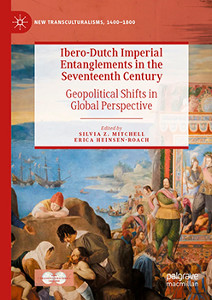 The full description from the publisher’s webpage can be found here.
Below is a sampling of advanced praise for the book:
“By foregrounding the adaptability of the Iberian and Dutch Empires, this volume convincingly challenges the existing scholarship on early modern empires, still largely oriented towards the seemingly inevitable dominance of the English/British empire. It demonstrates that the Iberian and Dutch empires endured into the second half of the seventeenth century by reinventing themselves through commercial and diplomatic cooperation after a period of confrontation and competition.” (Cátia Antunes, Professor, History of Global Economic Networks, University of Leiden, the Netherlands)
“Offering a series of case studies that bring together the histories of Spain, Portugal, and the Netherlands, this volume enriches the history of the long seventeenth century. With its focus on political, diplomatic, and colonial histories, it challenges the traditional narrative of British and French rise in the second half of the seventeenth century—and their putative displacement of the Spanish, Portuguese, and Dutch from the global stage—arguing that rumors of Iberian and Dutch decline have been greatly exaggerated.” (Benjamin Schmidt, Jon Bridgman Professor of History, University of Washington, USA)
Learn more about Dr. Silvia Mitchell: https://www.silviamitchell.com/
Learn more about Dr. Dawn Marsh: https://cla.purdue.edu/directory/profiles/dawn-g.-marsh.html
More details about the book can be found here: https://link.springer.com/book/10.1007/978-3-031-61523-8