Dr. Wendy Kline receives The Huntington’s Molina Fellowship in History of Medicine and Allied Sciences
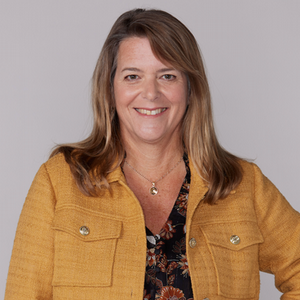
Dr. Wendy Kline, Professor of History and the Dema G. Seelye Chair in the History of Medicine, was awarded the Molina Fellowship in the History of Medicine and Allied Sciences from The Huntington Library (“The Huntington”) in San Marino, California.
The Molina Fellowship is an academic year program for nine to 11 months in residence, with a stipend of $50,000. Fellowship applicants must be pursuing scholarship in a field appropriate to The Huntington’s collections in the history of medicine and related sciences, including public health.
Dr. Kline will be in residence at The Huntington for the 2025-2026 academic year. Her project, entitled “Picking the Brain to Map the Mind: Morphology, Murder, and the Rise of the Psychiatric Expert Witness,” seeks to identify the early twentieth-century origins and evolution of the psychiatric mission to unlock the secrets of the brain by studying its morphology (the study of the brain’s size, shape, and structure).
Mapping the brain, otherwise known as “cerebral localization” (determining specific sites on the brain responsible for specific nervous functions), required immediate access to the specimen, because brain tissue starts to deteriorate in a matter of hours.
The Huntington Library holds the papers of Edward Spitzka (1876-1922), known as the “greatest brain specialist in America,” who successfully accessed fresh brain tissue from executed murderers, instantly available for dissection. “As a result,” explains Dr. Kline, “this mission took place not just on the operating table, but also in the courtroom. Spitzka sought to ascertain whether murderers had awareness and control of their faculties when committing murder, or whether they should be declared legally insane.”
His testimony on the condition of the brain laid the groundwork for the rise of the psychiatric expert witness in the courtroom, who would thereby heavily influence the law – and public opinion – on the relationship between brain and behavior. “My book will trace this mission by analyzing key murder trials– and the psychiatric expert witnesses that influenced their outcomes – over the course of the twentieth century,” says Dr. Kline.
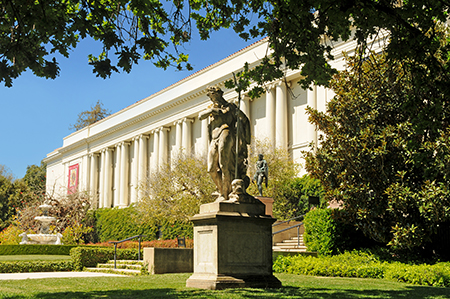 As a collections-based educational and research institution, The Huntington promotes scholarship in the fields of history, literature, botanical science, art history, and the history of science, technology, and medicine through access to collections and through academic fellowships. Its collections include more than 12 million items spanning the 11th to the 21st century.
As part of the fellowship, Dr. Kline will present at a two-day introductory symposium in September and participate in weekly working group sessions from October to May.
Learn more about Dr. Wendy Kline at: https://cla.purdue.edu/directory/profiles/wendy-kline.html and https://www.wendykline.com/
Learn more about The Huntington Library at: https://huntington.org/