School of Languages and Cultures

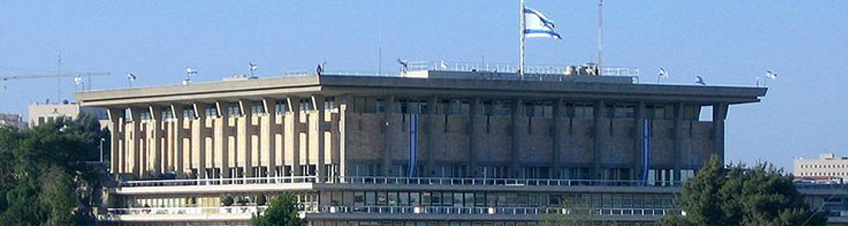
building with flag on top

Hebrew

The Hebrew Program at the School of Languages and Cultures offers language courses both in Modern and Biblical Hebrew. In addition, it offers courses on modern Israeli literature, society, and culture, as well as on ancient biblical Israel.

The modern Hebrew program is designed to teach all skills (comprehension, reading, writing, and speaking) of modern Hebrew, the colloquial language of Israel. In addition, it aims to provide students with cultural and literary knowledge of modern Israel. We offer four levels of language and courses on Israeli culture, literature, cinema, and other important topics.

Professional and research interests of the faculty include Hebrew literature, literary history and criticism, linguistics, translation, language and technology, and the teaching of Hebrew as a foreign language.

The program prepares students for academic, government, and business careers as well as employment in Jewish community activities.

The Purdue School of Languages and Cultures offers four semesters of biblical Hebrew (HEBR 121, 122, 221, 222).

Thus biblical Hebrew may be taken for language credit to meet course requirements in all fields that require a language.
The first semester is devoted to learning the basics: alphabet, vowel signs, how sentences work, and basic vocabulary-all of which are learned using sections of the Hebrew Bible (Old Testament). The first semester ends with translating one of the most interesting passages in the Hebrew Bible, Genesis 22, which tells of Abraham's sacrifice of Isaac.

The second semester finds us learning more about how the language works and translating more sections of the Hebrew Bible (Genesis 28, 29, and 37, and Exodus 3).

Second-year biblical Hebrew (the third and fourth semesters) is entirely devoted to the translation of books of the Hebrew Bible.

By the end of two years of studying biblical Hebrew, the student is equipped to enjoy reading and understanding the Hebrew Bible. Students may take the second-year course more than once, under a different course number, because each year the classes will translate different books of the Hebrew Bible.

For students who have studied two years of Greek and two years of biblical Hebrew, it is possible to take a course with a parallel translation of the Septuagint (the Greek translation) and the Hebrew Bible.
The Hebrew program is part of AACHI (American Sign Language, Arabic, Classical Studies, Hebrew, and Italian), a multidisciplinary academic unit that brings together the study of languages, cultures, and civilizations. In addition to Arabic, AACHI offers programs in American Sign Language, Classical Studies, Biblical and Modern Hebrew, and Italian, as well as interdisciplinary majors and minors in Religious Studies.

Chair for Arabic, Classics, Hebrew and ItalianErin Moodie

Biblical Hebrew Contact | Raleigh Heth

Modern Hebrew Contact | Alon Kantor