Kathryn Cramer Brownell Takes Political Research Beyond the Classroom Through Carnegie Fellowship
Political polarization is often described as a growing divide between Americans. But what if that division isn't simply a consequence of differing political beliefs? What if it is also the result of deliberate strategies designed to generate political power and profits?
That's the question Purdue University historian Kathryn Cramer Brownell explored through her research as a 2025 Andrew Carnegie Fellow.
Brownell, a professor of history in Purdue's College of Liberal Arts, examined the industries and individuals that helped transform political conflict into a profitable business. Her research is supported by a $200,000 Andrew Carnegie Fellowship, which recognizes scholars whose work addresses important challenges facing society.
More than a year after receiving the fellowship, Brownell has expanded her research, collaborated with scholars across disciplines and helped bring conversations about political polarization and information literacy to audiences beyond the university.
Uncovering the business behind political division
Brownell's current book project, The Enemy Makers: The Industries That Turned American Politics Into Open Warfare, builds on her previous book, 24/7 Politics: Cable Television and the Fragmenting of America from Watergate to Fox News.
While researching the rise of cable television and political news coverage, Brownell became interested in who was shaping the information behind political scandals. Her research now examines how political consultants, opposition researchers, the tabloid press, pollsters and crisis management professionals have influenced public opinion since the Watergate era, when new transparency requirements and ethics regulations created opportunities for professionals to manipulate how political information was gathered, presented and used.
"I think what history helps us understand is that political polarization is not something that naturally develops, but rather it is an intentional political strategy and tool to motivate voters, gain attention and generate revenue," Brownell said.
Her research examines how political strategists studied consumer behavior, entertainment and media trends to understand what captured Americans' attention. They discovered that anger could be a powerful motivator.
"Frequently they found that people engage more when they're angry," Brownell said. "And so, they're trying to make people angrier so that they'll engage with their candidate or cause, give more money, show up to vote, write letters, all of those things."
Taking research beyond the classroom
The Carnegie fellowship has provided Brownell with resources to conduct archival research, including work at the Library of Congress and the Jimmy Carter, Ronald Reagan, George H.W. Bush, and William J. Clinton presidential libraries, and collaborate with scholars studying political polarization from different disciplinary perspectives.
Through Purdue's Center for American Political History, Media, and Technology (CAPT), Brownell has worked with faculty in history, political science, communication and sociology to examine how information influences political behavior.
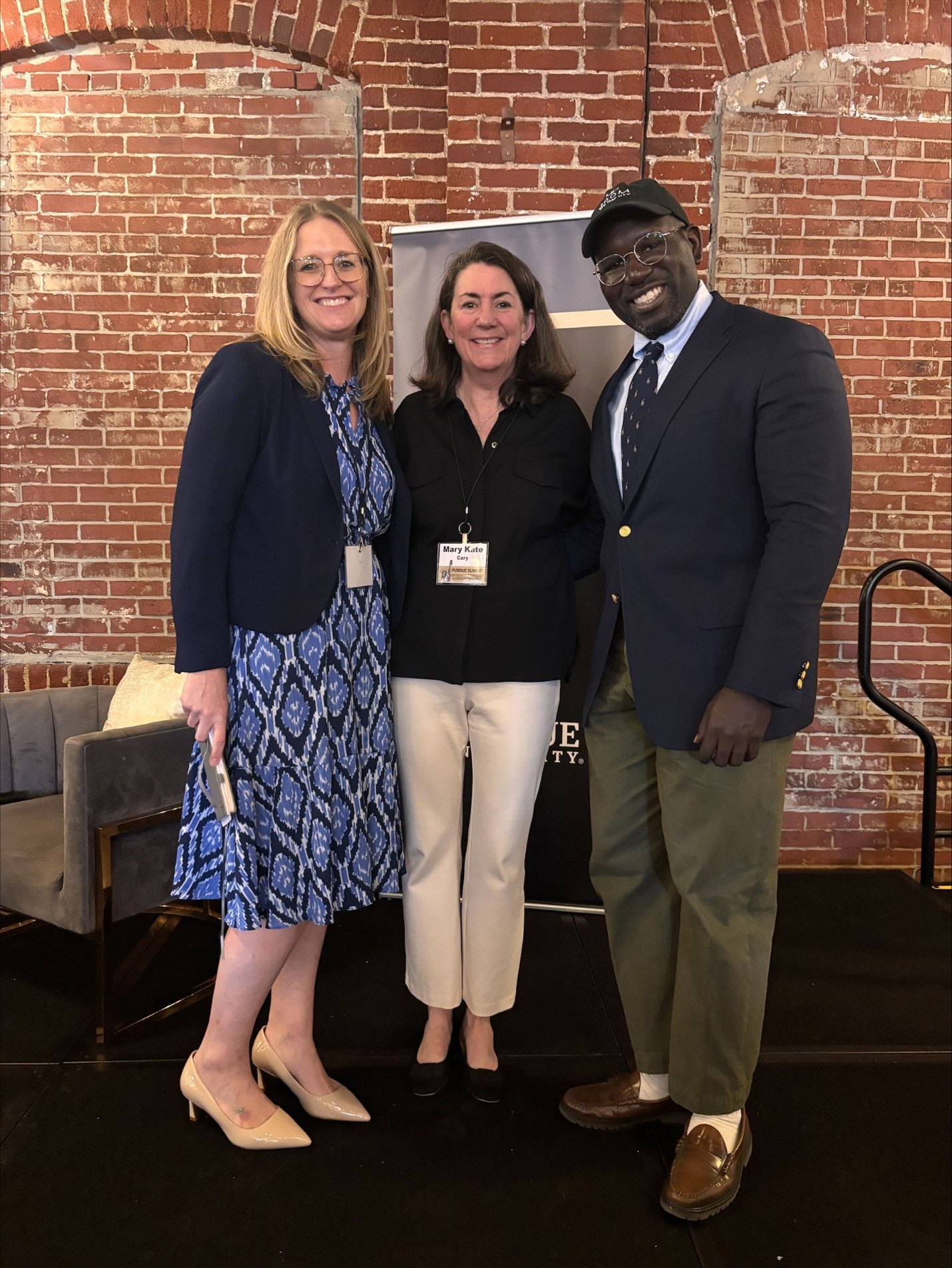
Those collaborations led to an April 2026 symposium organized with Purdue researcher Daniel Schiff, who is a co-director of the Governance and Responsible AI Lab with Kaylyn Jackson Schiff. The event brought together scholars, journalists and policymakers, including New York Times columnist Jamelle Bouie and former presidential speechwriter Mary Kate Cary, to explore political misinformation, artificial intelligence and ways to help the public better navigate today's information landscape.
Brownell said the fellowship helped make these conversations possible by connecting researchers with professionals and organizations interested in addressing political polarization and enhancing civic education.
Finding solutions through the liberal arts
While Brownell's research examines how information can be manipulated, she believes education provides an important tool for helping people recognize those efforts.
In her Purdue history courses, students learn to evaluate sources, identify biases and question how information is presented and its credibility. Those same skills, she argues, are essential for navigating today's political and media landscape.
"I think the most important one is just discernment," Brownell said. "Where is it coming from? What are the motivations? What are the biases? What is overlooked? What is emphasized and why?"
As she continues work on The Enemy Makers, Brownell hopes to build on the fellowship's success by making interdisciplinary collaboration and public programming a lasting part of CAPT's research, teaching and public engagement efforts.
Ultimately, she believes the skills developed through a liberal arts education can help people become more thoughtful consumers of information, better understand the forces shaping political discourse, and empower civic engagement.
"I think investing in a liberal arts education—inside the classroom and in the broader community —is a key solution for the democratic challenges that we face today," Brownell said.