Purdue Linguistics Symposium

Purdue Linguistics Symposium Program

  • 1:00 – 1:30 PM Registration and Opening Remarks
  • 1:30 – 1:50 PM Phonetic Interference and Orthographic Depth: Evidence from Code-switching with Mandarin Characters and Pinyin
    • Yi-Fang Cheng. Yiying Jiang & Daniel Olson, Purdue University
  • 2:00 – 2:20 PM Prosodic Prominence in Postverbal Elements in Persian Motion Constructions
    • Ailar Amany, University of Wisconsin–Milwaukee
  • 2:30 – 2:50 PM Phonetic Interference in Pronouncing Spanish Rhotic Consonants Among Native Vietnamese Speakers in Comparison to Native Spanish Speakers
    • Ngoc Diep (Alice), Tulane University
  • 3:00 - 3:30 PM Coffee Break
  • 3:30 – 3:50 PM LLM-as-judge: pragmatic performance in LLMs through the lens of sarcasm
    • Raghav Sharma, Parmanand Sahu, Yan Cong, Emmanuele Chersoni, Purdue University
  • 4:00 – 4:20 PM Language attitudes and ideologies associated with Calabrese
    • Kathleen Wagner, Purdue University
  • 4:30 – 4:50 PM The "elusive" manner implicature: How do we infer meaning from form?
    • Karen Fullin, Purdue University
  • 5:00 – 6:00 PM Plenary Speaker #1
    • Title: Rethinking Variability: Intra-Speaker Dynamics in Heritage Language Research
    • Speaker: Dr. Silvia Perez-Cortes - Rutgers University, Camden

  • 8:00 – 8:20 AM Registration and breakfast
  • 8:30 – 8:50 AM The effect of atypical contexts in the selection of Spanish copula verbs by heritage speakers
    • Francisco Clavijo, Purdue University
  • 9:00 – 9:20 AM Fostering L2 Aspectual Development in an Online-Asynchronous Context through Concept-Based Language Instruction
    • Próspero N. García, Rutgers University, Camden
  • 9:30 – 9:50 AM Morphosyntactic Cues for the Processing of Passive Voice Sentences in L1 Spanish
    • Danny Melendez, University of Illinois at Urbana-Champaign
  • 10:00 - 10:30 AM Coffee Break
  • 10:30 – 10:50 AM The acquisition of the inchoative se by child and adolescent heritage speakers
    • Santiago Castillo, Purdue University
  • 11:00 – 11:20 AM Syntactic patterns for borrowings in Mayangna: grammaticalized Vs as v’s
    • Elena Benedicto & E. Salomón, Purdue University
  • 11:30 – 11:50 PM Forward- and Backward-Looking Dependency Processing in L1 and L2 English: Human Reaction Time and LLM-Surprisal.
    • Golsa Khodadadi, Elaine Francis, Yan Cong, Shaohua Fang, Purdue University
  • 12:00 -1:30 Lunch (Provided) 
  • 1:30 – 2:30 PM POSTER SESSION
  • 2:30 – 3:30 PM Plenary Speaker #2
    • Title: Computation and Linguistic Meaning: Evaluating, Improving, and Applying Language Models in Language Studies
    • Speaker: Dr. Yan Cong, Purdue University
  • 3:30 – 3:50 PM Adverb positioning in adult heritage Spanish: a preference study
    • Edier Gomez Alzate, Purdue University
  • 4:00 – 4:20 PM Semantic Processing and Individual Variation: Experimental and Modeling Evidence from Quantifier Scope
    • Shaohua Fang, Yue Li, Yan Cong, Purdue University
  • 4:30 – 4:50 PM The Real-Time Processing of 'Whether' Islands in English: Evidence from a Plausibility Diagnostic in Self-Paced Reading
    • Kyle Swanson & Vanessa Sheu - Independent Scholar; Department of Linguistics, Purdue University
  • 5:00 – 5:30 PM Closing Remarks

1. Jingying Hu,Yi- Fang Cheng, Minh Khong Bui | Purdue University

  • From Exploratory Data Analysis to Predictive Modeling: A Multi-Stage Data Science Workflow for Second Language Speaking Proficiency Modelling

2. Jarod Warner | Indiana University

  • Dong ‘down’ in Belize Kriol: integrating systematic gaps and emergent patterns into OT

3. Isaac Hill | College of Charleston

  • What borrowings tell us about phonology: Lexical Borrowings in a community dictionary

4. Prasiddhi Shivakumaran | Purdue University

  • Metric feet and vowel lengths in Yusku-Mayangna

5. Yue Li, Elaine Francis, Golsa Khodadadi, Marley, Mack, Sara Ok, & Shaohua Fang | Purdue University

  • Effects of verb type and prior context on the production of relative clause extraposition in English

6. Seyyed Hatam Tamimi Sa'd | Harry S Truman College, IL

  • The Noun-Verb Distinction in an Emerging Sign Language

7. Naftal Nyakundi | Masinde Muliro University of Science and Technology, Kenya

  • Cultural Intelligence and Multilingual Interaction in Kenyan English Language Classrooms

8. Ran Yi & Zhensheng Li | University of New South Wales, Shanghai Artificial Intelligence Laboratory

  • Modeling Coercive Prosecutorial Tag Questions for Legal NLP: Evidence from a Bilingual Chinese–English Corpus in Australian Criminal Courts

9. Daniela Castano Lavado | University of Florida

  • Exploring Sense of Belonging in Heritage Speakers: A Sociolinguistic Approach

10. Marzie Taram |  University of Illinois at Urbana- Champaign

  • The Architecture of Functional Affixes within the Persian Nominal Domain

11. Zhihao Tian | University of Illinois at Chicago

  • Hanzi, IPA, or Latin Script: Literacy Practices in Tujia Language Revitalization

12. Sebastian Henao & Alejandro Cuza | Purdue University

  • The Effect of Complexity on Clitic Climbing in Spanish Wh-Questions: L2 vs. Heritage Speakers

13. Senlin Wang | Qingdao University

  • Survival on the Margins: Linguistic Hybridity and Regional Identity in Nanjiang

14. Odai Hayajneh | University of Texas at Arlington

  • Wh-the-epithet in Jordanian Arabic

15. Snigdha Khanna | Indiana University Bloomington

  • Variation in Indian English Vowel Space: Evidence from a Pilot Corpus

16. Santiago Castillo | Purdue University

  • Production of present perfect morphology by Spanish L2 learners - a corpus analysis

17. Nguyen Le | Purdue University

  • A Transnational Linguistic Landscape Analysis of Vietnamese Urban Spaces: Insights from Ho Chi Minh City and Little Saigon

18. Laura Demsey | University of North Carolina at Chapel Hill

  • Beyond the Standard: Teaching Linguistic Variation to L2 Learners

19. Kathleen Wagner & Isabella Davis | Purdue University

  • Perspective Change in American Sign Language Agentive Motion Predicates

20. Alyssa Nez | Purdue University

  • Language Attitudes and Ideologies Among Indigenous Students in Higher Education


Welcome to the Purdue Linguistics Symposium 2026!


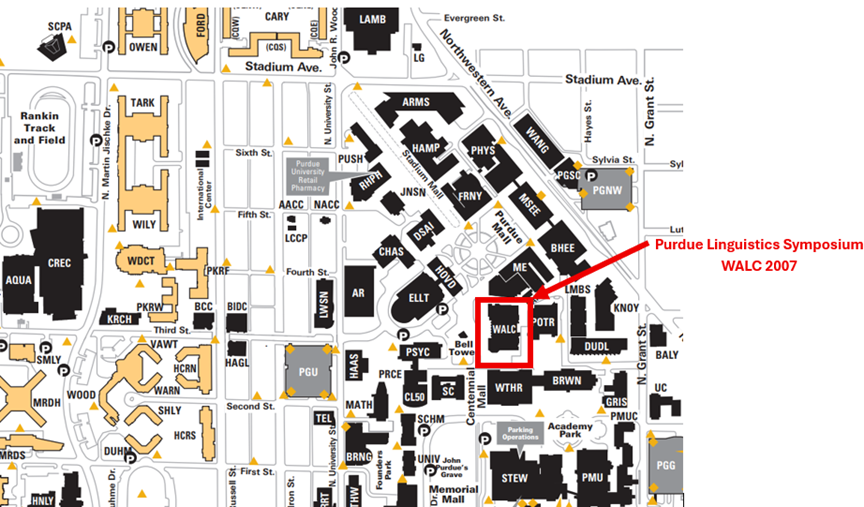
April 24th-25th, 2026 | WALC 2007

The Department of Linguistics at Purdue University is announcing its annual Purdue Linguistics Symposium (PLS) 2026. We invite scholars working within all theoretical and applied areas of linguistics to submit their research and join us at PLS 2026. Topics include, but are not limited to syntax, semantics, syntax-semantics interface, phonetics, phonology, morphology, L2 acquisition, bilingualism, pragmatics, historical linguistics, sociolinguistics, sign language, and corpus linguistics. PLS 2026 will be held in person on the West Lafayette campus of Purdue University.

About the Symposium

The Purdue Linguistics Symposium is an annual conference collaboratively hosted by the Purdue Linguistics Association and the Department of Linguistics. This year's topics include but are not limited to phonetics, phonology, morphology, L2 acquisition, bilingualism, pragmatics, historical linguistics, sociolinguistics, sign language, corpus linguistics and computational linguistics.

About the Department

Purdue's Department of Linguistics is distinguished by a strong applied focus after thorough theoretical training. Our graduate students apply theory while studying areas like bilingualism, language acquisition, corpus linguistics, natural language processing, and sign languages. Our many on-campus linguistic labs provide opportunities for research and collaboration. The Purdue Linguistics Association is our student organization for inquisitive minds interested in probing the depths of language. We create a strong support network for our members' intellectual growth. We foster mentor relationships, inform our members of linguistic research opportunities, host an annual symposium, and more.

Call for Papers

Abstracts for individual presentations and poster presentations should be limited to 500 words (excluding title and references) and should fit on a single page, single-spaced, 12-point Times New Roman font. An additional page containing references, tables, figures, or examples may also be included. Abstracts must not contain any identifying information.

Important Dates:

  • Abstract submission open: December 21st, 2025
  • Abstract submission deadline: February 21st, 2026 (now closed) 
  • Author notifications: week of February 27th, 2026
  • Registration deadline: March 27th, 2026 ( now closed )

Event Format & Guidelines

The Purdue Linguistics Symposium will feature both poster presentations and oral presentations. Poster boards at the conference will be 36 x 48 inches (Width: 36 inches, height: 48 inches) in vertical orientation. Any poster that fits within these dimensions will be suitable. In case you need a poster template, here you have some web sources from where you can find and download one. Oral presentations will be 20 minutes long, followed by 10 minutes for questions.


Plenary Speakers
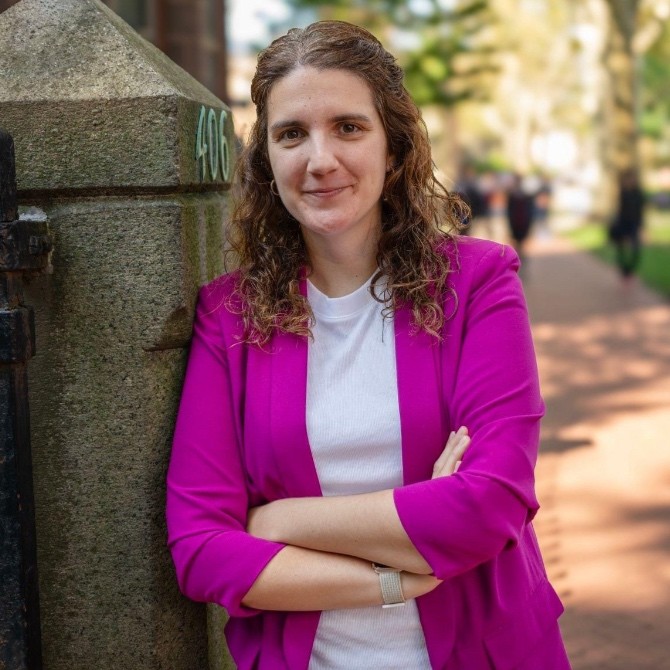

Silvia Perez head shot leaning on postDr. Silvia Perez-Cortes - Rutgers University, Camden

Dr. Silvia Perez-Cortes is an Associate Professor of Spanish in the department of World Languages and Cultures at Rutgers University, Camden. She holds a PhD in Bilingualism and Second Language Acquisition from Rutgers University, New Brunswick (2016), an MA in Hispanic Linguistics from the University of Massachusetts-Amherst (2011), and a Bachelor of Arts in Spanish Philology from the University of Barcelona (2009). Dr. Perez-Cortes’ research interests lie in the areas of bilingual language acquisition and education in language contact situations. She is particularly interested in analyzing the grammatical development of heritage speakers (both children and adults) to explore how syntax and the lexicon are accessed and represented in the bilingual mind. Dr. Perez-Cortes is also involved in community engagement and is part of the clinical team of several grant-funded projects focused on fostering dual language education and heritage language literacy among Latino families. Her work in all these areas has been published in journals such as Language Learning, Journal of Developmental & Behavioral Pediatrics, Second Language Research and Studies in Second Language Acquisition.
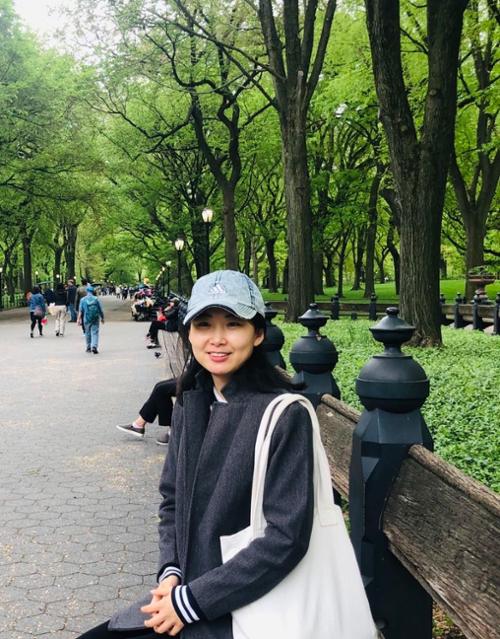
Yan Cong sitting on a bench smiling surrounded by treesDr. Yan Cong - Purdue University

Yan Cong is an assistant professor of linguistics in the School of Languages and Cultures at Purdue University. Her general research interests are Natural Language Processing and linguistic indices of language development, decline, and recovery, with a particular focus on meaning-related indices in language intelligence. Her recent work explores optimizing machines to reason about enriched meanings as effortlessly as humans. Her research has been published in venues such as Natural Language Engineering and Computational Natural Language Learning.


Symposium Chairs and Planning Committee
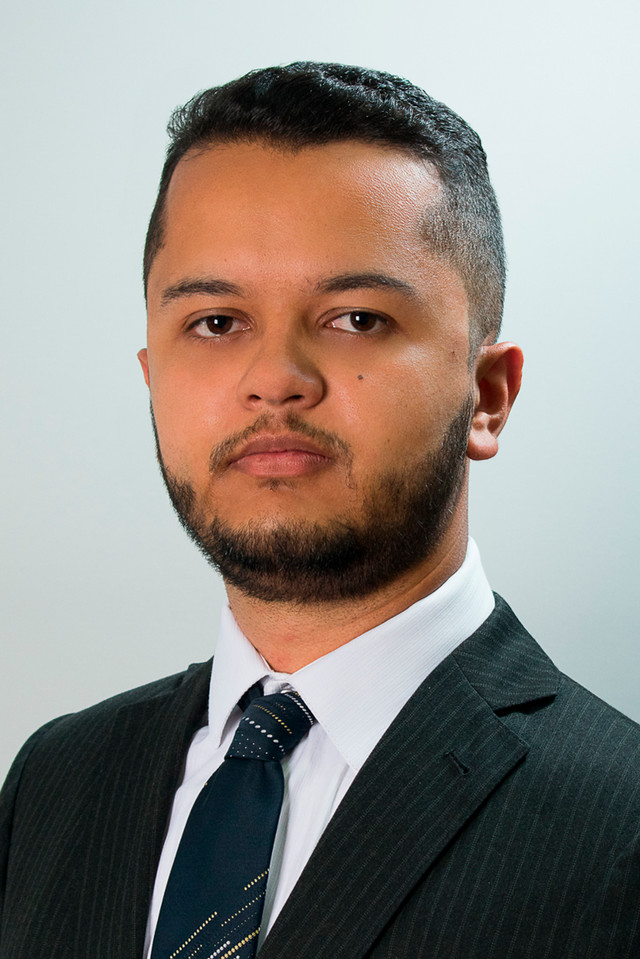

Untitled ImageSantiago Castillo Revelo, Chair

Santiago is a Ph.D. student in Linguistics at Purdue University. He is the president for the Purdue Linguistics Association 2026. His research interests include Second Language Acquisition, Heritage Language Learning, Bilingualism, and the Syntax-Semantics interface. Presently, he is engaged in research at Purdue's Second Language Acquisition and Bilingualism Research Lab, exploring the acquisition of tense/aspect in Spanish among Heritage and Second Language learners.
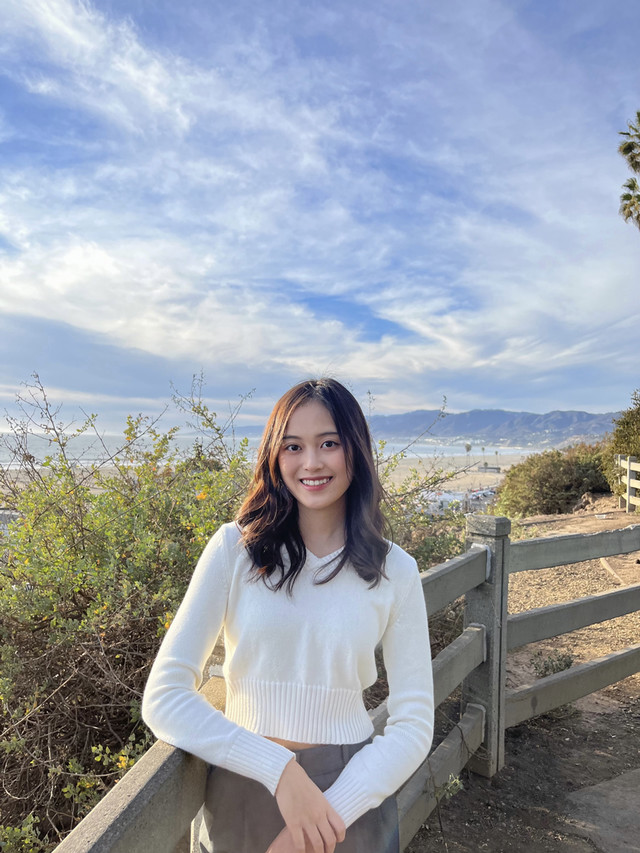


Untitled ImageYiying Jiang, Co-Chair & Webmaster

Yiying is a Ph.D. student in Linguistics at Purdue University. She is also the vice-president and Webmaster for the PLS2026 working along with the Purdue Linguistics Association. She is a member of the Purdue Bilingualism Lab and the Experimental Phonetics and Phonology Lab. Her research focuses on cross-linguistic influence in bilingual speech, tones, speech perception, and acoustic phonetics.


Francisco Clavijo- Francisco is a third-year Ph.D. student in Linguistics, a member of the Second Language Acquisition Laboratory, and the Social Chair of the Purdue Linguistics Association. His research interests include bilingualism, heritage languages, and language acquisition.

Zeyu Feng- Zeyu Feng is a second-year PhD student in Linguistics. She is the Workshop Chair. As a passionate phonetician, she is interested in exploring how adults acquire speech sounds in their second language or additional languages. She is also an amateur gardener, cyclist, baker, and musician.

Ning Zheng- Ning is a Ph.D. student in Linguistics at Purdue University and serves as the Treasurer of the Purdue Linguistics Association. She is a member of the Phonetics and Phonology Lab. Her research interests include acoustic phonetics, bilingualism, speech production and perception.


THANK YOU TO OUR GENEROUS SPONSORS


Department of Linguistics, Purdue University
Department of English, Purdue University
College of Education, Purdue University
School of Interdisciplinary Studies, Purdue University
School of Languages and Cultures, Purdue University
College of Liberal Arts, Purdue University
Purdue Graduate Student Government
 

Helpful Information

  • By Flight

    • Purdue University Airport allows you to fly directly to campus! The Purdue University Airport (LAF) has partnered with Southern Airways Express to run daily flights via the Chicago O'Hare International Airport (ORD)
    • Indianapolis International Airport is the nearest commercial airport, serviced by most major airlines and their partners, and is 1 hour south of Purdue University. The most convenient way to travel from airport to campus is by shuttle or rental car.
      • Airport-to-Campus Shuttles : Lafayette Limo, Reindeer Shuttle, or GO Express.
      • Although not recommended, there are Greyhound bus and Amtrak train services from downtown Indianapolis to Lafayette. 
    • Chicago O'Hare International Airport (ORD) is the nearest major international airport, located approximately 140 miles north of Lafayette-West Lafayette (about 3 hours driving).  The most convenient way to travel from airport to campus is by shuttle or rental car.
      • Airport-to-Campus Shuttles : Lafayette Limo or Reindeer Shuttle.
      • Travelers can take the Blue Line from O'hare Airport to Clinton, where they can connect to Amtrak or Greyhound services. 
    • Chicago Midway International Airport (MDW) is another major airport located in Chicago. There are no direct bus or shuttle services between Purdue University and Midway. The most convenient option will be to rent a car. 
      • Travelers can also take the Orange Line to downtown, transfer to the Blue Line bound for Forest Park, embark at Clinton, and travel via Greyhound or Amtrak.
  • By Train or Bus

    • Amtrak Train service to Lafayette is available from many cities by traveling through Indianapolis or Chicago. Amtrak trains arrive and depart in Lafayette only once per day, only three days a week (Tuesday, Thursday, and Saturday), so plan your travel accordingly.
    • Greyhound Bus and Flixbus service the Lafayette-West Lafayette area from the Chicago and Indianapolis hubs. Schedules and fares vary, so consult the Greyhound website for up-to-date information. Be aware these services are inconsistent, delays and cancellations are common.
    • For current Purdue students and staff only, Purdue offers a commuter bus service between the West Lafayette campus and Purdue University Indianapolis campus. View schedules and information here.
    • Getting From Lafayette to CampusAmtrak, Greyhound, and Flixbus all drop passengers off near the Lafayette CityBus central bus station, which is a 25 minute walk from campus. You can take the free-of-charge Connector (Route 23) bound for campus, or routes 4B or 1B.

  • By Car

    • From the North or South- Take I-65 to Exit 178 

    • From the West- Take I-74 to Exit 34

    • From the East- Taking US 25 west: continue onto Schuyler Ave (passing under I-65)

  • Walkable / Bikeable Hotels
    • The Union Club Hotel at Purdue University
    • Hampton Inn & Suites West Lafayette
    • Hilton Garden Inn West Lafayette Wabash Landing
  • Hotels in West Lafayette
  • Hotels in Lafayette