Student Insights on Critical Disability Studies Classes
“This class has completely changed the way I view disability in literature and in life!”
“I have learned so much that is applicable outside of the classroom! This is a class I will remember for years and years!”
“This course has been one of those rare types of courses that truly challenge and change the way you think. The materials (theory and literature readings) combined with the discussion have enhanced my understanding of how disability is discussed, written about, portrayed, and construed beyond what I could have imagined when I signed up for the class.”
“I think EVERYONE at Purdue should have to take this class.”
“Critical disability studies is such an important field and has so much to offer undergraduate students in any major. It is wonderful to listen to my peers openly discuss how much this class changed their views on disability. Although this was an English class, many of my peers belonged to other majors. The diverse majors represented in this disability studies course demonstrate how relevant this field is to a large number of undergraduates. More students need the opportunity to take disability studies courses and expand their knowledge of disability.”
Outstanding Senior in Critical Disability Studies
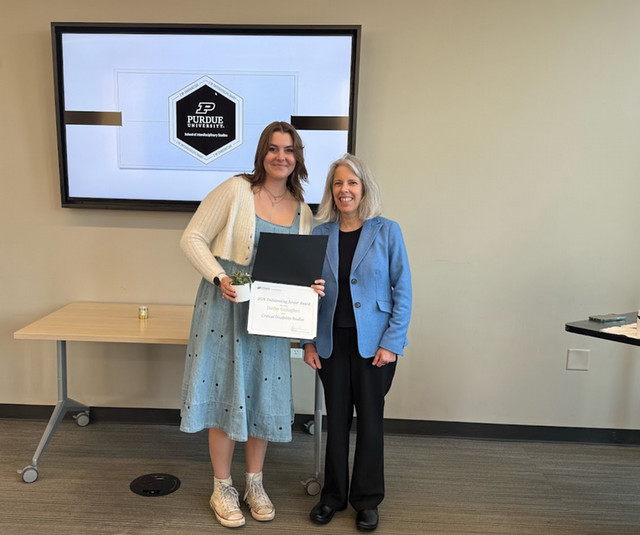 "My relationship with disability studies began when I added a minor in ASL and Deaf Culture; a requirement for the minor is ASL 280, which explores the language, culture, and society of the Deaf community. Due to ASL being such a popular minor (course availability was very limited,) I ended up trading it out for a minor in critical disability studies, where I got to take classes learning about different cultural, social, political and medical aspects of all kinds of disability. Most of these classes also blended my interest in CDIS with literature and history, and I can’t overstate how profoundly this subject has shifted my relationship with the world and my perspective on the language, policies, and frameworks through which disability is understood and discussed. Even in conversations about intersectionality, I feel like disability is so often minimized or sidelined despite how fundamentally it shapes an individual’s access, identity and experiences, regardless of whether they themselves are or are not disabled.
My classes in this minor have included some of the most poignant and engaged classrooms I’ve had the pleasure to attend at Purdue, because all of my peers were getting to exercise muscles they didn’t normally use, and learn something new. Being a literature major, I have definitely experienced some burnout with a courseload that focuses on polishing and perfecting a very specific model of literary analysis. However, my CDIS classes that intersected with literature or history were consistently thoughtful, challenging, and inventive with the way they made me and my classmates think; when reflecting on my time at Purdue, I am most grateful for these courses.
When thinking about my future, I know that I want to pursue graduate education with the goal of earning a PhD. I would like to focus my studies on looking at disability studies in tandem with either Medieval literature or the evolution of romance literature. I’ve been lucky enough to be introduced to all three of these things at Purdue, and have absolutely fallen in love with each one. I’m looking forward to the opportunity to further make my mark in this field!" Darby Gallagher 2026
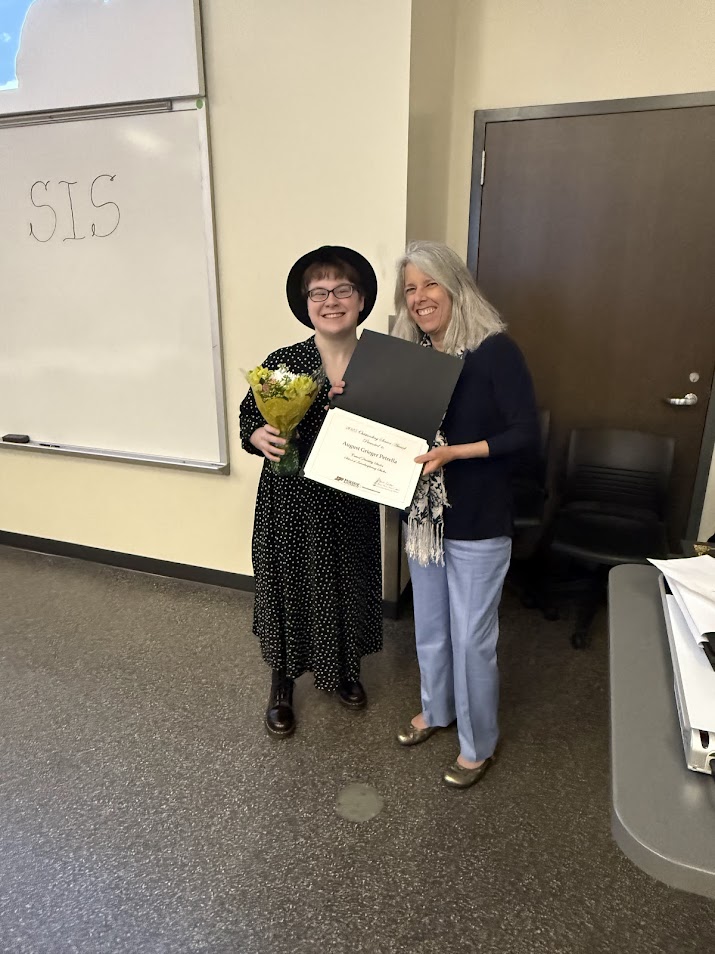
"Thank you to the Disabled community at Purdue, SIS, and the English Department, for helping me gain confidence and see the value of my perspective as a disabled person and giving me the resources to learn more about the academic traditions of intersectional feminism and disability, which has made me a more well rounded empathetic student, who sees the world with endless optimistic skepticism." August Grieger Petrella 2025