November 12, 2025
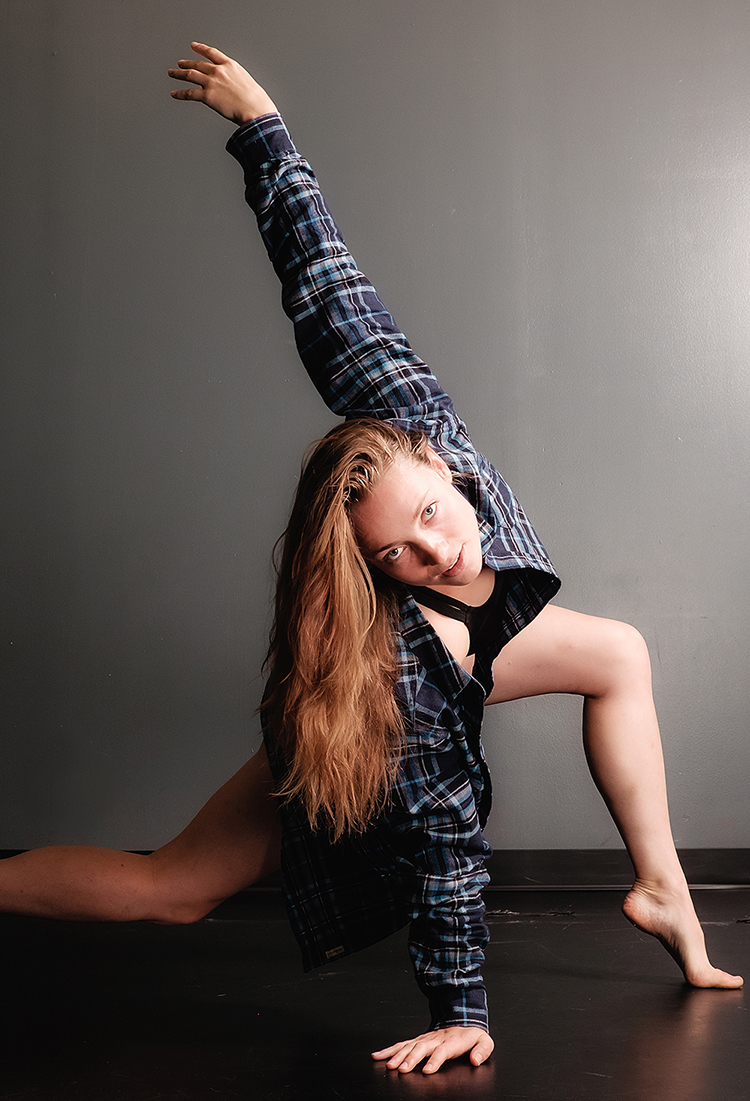
Amberly Simpson took advantage of every opportunity we offered when she was studying in the Dance Program (then the Dance Division). As she explains, she started with some of the same fears and reservations that we still encounter from our students, many of whom also come from the competition dance background Amberly describes. But not all of them open up and do the level of work Amberly did as she began to discover her own artistic voice. While we knew she had immense drive and talent when she was here at Purdue, the amount of work she has done to create a career in dance exceeds any expectations we could have had. She is quintessentially ‘paying it forward’ as she creates opportunities for dancers of all experiences and backgrounds to dance with her company and learn the things she learned and more. Her next big project is creating a new dance festival in Kentucky, where she will surely impact even more dancers of all ages.
When were you at Purdue dancing? What else were you studying? What degree did you graduate with?
I attended Purdue from 2010-2015. I came to Purdue from California, truthfully, because I just wanted to be somewhere different from where I grew up, to start somewhere fresh away from all the drama of my childhood. Purdue just seemed like a really fun, community-centric environment. I enjoyed all of the traditions the university had, plus, of course, a quality education. I started as a major in Wildlife, but then switched over to Psychology and Creative Writing which are the degrees I graduated with. (BA in Creative Writing and BS in Psychology)
What are you doing now? How did getting your minor in dance impact your career choices and work post-graduation?
My primary, paying job is running a Dance magnet program at a Performing Arts middle school: Noe Middle School in Louisville, Kentucky. There, I work with grades 6-8 and expose them to all the wild things that I realized young people in Dance pretty much never get exposed to until college if they decide to pursue Dance at that level. I teach them a TON of things that I was taught through the Dance minor program at Purdue, such as site-specific dances, group compositional improvisation, nontraditional partnering, and a lot of the choreography and composition exercises we did in class and rehearsals.
My heart’s work is with Ambo Dance Theatre. We are a 501(c)(3) professional modern dance company and school. Our primary work is with creating new and original modern dance works, but we also use this to create jobs in the arts. Louisville has almost no dance infrastructure, so the market rates for dance are incredibly low or nonexistent (i.e. literally work for no pay). We are the only organization that pays performers for rehearsals and performances, and while it’s still an incredibly small amount that we pay, we’re working to raise the bar locally in general.
I didn’t intend to pursue Dance as a career, and if someone asked me to articulate why I did, I can’t really. Sometimes you just feel called to do something. I have heard other artists reflect this sentiment that they just couldn’t NOT pursue their art in the way that they have. No one goes into the arts because they’re looking for an easy path, they go into it because something inside them tells them this is where they are meant to be, and they listen. Purdue prepared me very well for this, however! Everything from writing proposals to choreograph for the PCDC concert, to student-led directorial work through X Works, to having the ability to take on faculty-led side projects such as performing in the Prague Quadrennial and TEDx…all of it replicates the practices and environments you can find within the professional world. Even the self-driven line of study helps to pave your way for working as an artist. There is no singular roadmap to Dance as a profession, so forging and creating that at Purdue (a lower risk environment) gives you great practice for thinking long term about how to build toward your long term desired outcomes in Dance!
What should the world know about the Purdue Dance Program?
While you’re there, you’re going to take it for granted. You just are. You don’t realize how much is provided to you, how much work is done to foster the collaborative work environment and community, and how accessible the structure is as a whole. You won’t realize it until you have to work 10x harder to get it elsewhere, or the only other option is to create it yourself. It’s a tiny gem that truly does prepare you for the professional world if you take advantage of all the opportunities available to you.
Now that you have time away from Purdue, can you reflect on what makes our program special? What did you take away from our program?
The diversity of backgrounds among the dancers in the program. It is incredibly rare to find dance spaces that bring together a group of dancers with varying skill levels as performers and make them look strong and competent on stage together. This is in large part because of the collaborative choreographic process used at Purdue! It is very community-centric and inclusive! I didn’t realize how much this was true until I left and started dancing in other spaces, or trying to foster and build my own creative space.
Also, the fact that we were (at the time) a minor program was really unique in that it allowed you to participate with an incredibly broad range. Sometimes programs with a major do not allow non-majors to participate in all classes and performances. This was a key piece of the program’s accessibility! You would have people just dipping their toes in, and others going at it full throttle, but they were all bringing important things to the table. It allowed us to be really well-rounded. I don’t think if I had exclusively studied dance I ever would have pursued it, but being able to dip into other fields of study alongside it made me start seeing connections between fields of study that still influence my work today, and also, of course, influenced my work at the time I was there.
What are a couple of your most cherished, clear, important memories of your time with us in the Dance Division and PCDC?
The guest artist experience with Bill Wade and getting to learn his choreography in the dance “Ascension”. But even this really started with Sally Wallace’s piece “Where the Earth Touches the Sky”, which later developed into “Clear View Falling”. Purdue’s emphasis on nontraditional partnering and contact improvisation has been a MAJOR game changer for my career now, but even before that it was hugely influential to my experience in Dance at Purdue and my growth as a person at the time. It helped me to work through personal traumas and challenges around body image and sexual assault. It helped me to develop a greater awareness of my body and all it was capable of doing, as well as how to think about my body and weight in space. In many ways, it is the ultimate “work smarter, not harder” movement form, and it is INCREDIBLY rare that anyone teaches dancers this! The fact that we had an education in it is something that I took for granted; I had no idea how rare and special it was!
Another super influential experience for me was getting to work with guest artist Amii Legendre in site-specific dance. This flipped so many of the ideas I had about dance on their head and opened so many doorways for me. I performed a solo, that was largely monologue, in a storage closet inside the Pao Hall Art Gallery, and the performance was designed for an audience of just one person. It was some of the most radical experimentation that I had ever done, and it really paved the way for me with risk- and chance-taking in my work.
And, of course, the department rallying together funding to send me to the American Dance Festival. This was probably one of the first experiences in my life where someone showed support in me because they saw future potential in me beyond the program itself, and not just for what I could offer back into the program. I grew tremendously as a dancer through this experience, and connected with so many different artists. One of the artists I met there, Gaspard Louis, was a former Pilobolus Dancer who now runs his own company. He has since become a bit of a mentor to me in starting my own company! I also met the person who would later become my husband at ADF, so it's an experience that continues to come back full circle for me both professionally and personally. My long term dream is that one day my company might have the opportunity to perform at ADF!
Last but not least, getting to create a piece on the PCDC Company that integrated contemporary dance and pole arts. While I don’t do aerial work anymore due to a lack of time and access, it was a bold piece that the Purdue faculty took a chance on. I remember writing a 14-page proposal where my goal was to find any possible fault the faculty might take with the idea and debunk it before they had the chance to question, hahaha! But my favorite memory coming out of that was having a rule written in the PCDC policies as a result…I figured it left a lasting legacy ;)
Did you know about the dance program at Purdue before you came here? How did you find us?
I first heard about PCDC through the brochure Purdue sent listing extracurricular activities on campus. Back then, it was still listed as Purdue Repertory Dance Company! (It is currently Purdue Contemporary Dance Company PCDC) I actually came to the audition, but they had us perform a phrase *gasp* in silence! So I called up my friends back home and, instead of attending the callback, told them all about how I had attended “the stupidest audition”. This was my first exposure to modern dance and, needless to say, I was not mature enough to “get it” at the time.
I started taking dance classes through the Dance Division in my second year at Purdue, and this is also when I got involved with XWorks. I still wasn’t a part of PCDC yet because I was holding onto my weird, 17-year-old know-it-all stereotypes. But since I was taking classes, I had to attend the concert. In the Spring of 2012 was when I saw Rebecca Bryant’s “Suite Female” and I think I was the only person in the audience who “got it”. I remember diving into my phone and texting all of my unsuspecting friends: “Holy sh*t. I just saw this dance, and it was about birds, but it WASN’T about birds!! It was about feminism and stereotypes about women!!!” That was when I decided I needed to join the company and when I started getting more involved with PCDC and the Dance Division as a whole!
When you consider your time at Purdue, how important was dance to your experience?
It was everything! I was getting my degrees in Psychology and Creative Writing, but I planned all of those schedules around my Dance commitments! I actually took so many Dance classes at Purdue that, when it came time to apply for my teaching certification, they gave it to me even without the official degree requirement because I had enough credit hours for it to qualify as a major, and a diverse enough course load. I’ve always been a person who was either 100% in or not in at all if I committed to something, and Purdue Dance was no different.