HIST 601 – IBERIAN EMPIRES AND THE FIRST GLOBAL AGE
FALL 2025
SCHM 317- TUESDAYS 6:00 to 8:45
Professor Silvia Z. Mitchell
mitch131@purdue.edu
Office Hours: by appointment
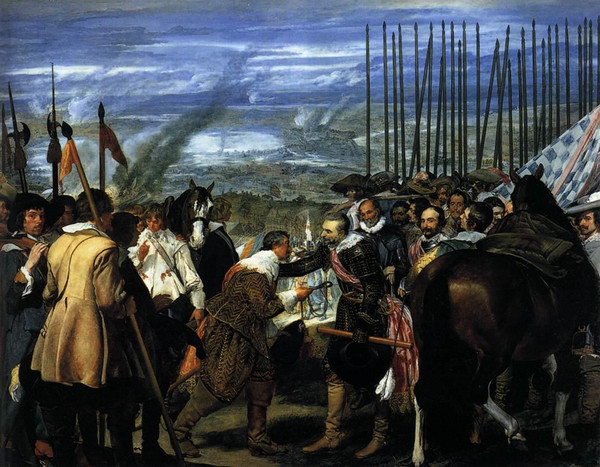
During the second half of the fifteenth century and within the span of only a few decades, Portuguese and Spanish explorers opened up European frontiers across the oceans giving rise to what scholars now call the “First Global Age.” This course explores the geopolitical system that emerged since the mid-fifteenth century as the Iberian monarchies of Spain and Portugal expanded outside of Europe. Their encounters and clashes with the Aztec, Inca, and Ottoman empires as well as competition and entanglements with the other emergent imperial powers such as the Dutch, English, and the French gave birth to a new geopolitical system.
Students will be introduced to key historiographical traditions from Braudel to the present. While the seminar takes the Iberian Empires of Spain and Portugal (united in 1580 and officially divorced in 1668) as the point of the departure, the content of the course provides a solid foundation to understand the history of Europe and the world. Its emphasis will thus be comparative, regional, pan-European, and trans-Atlantic.
Students will be introduced to classic works, comparative histories, and new historical approaches. Readings, grouped in terms of chronology and themes, will be evaluated and placed within historiographical perspectives.
Requirements and Grade Distribution:
- 2 book reviews (1500 words). 20 points each. Reviews will be based on a single monograph. You should describe the central argument/s, explore the author’s use of evidence and sources, and evaluate his/her contributions to the historiography. You may consult the reviews of the book (if available) by other historians. Just cite them if you do. You can submit up to two additional reviews for extra practice or grade improvement if needed.
- Short thematic/historiographical paper (10 to 12 pages minimum, up to 20 pages maximum) on a relevant topic chosen in consultation with me. 50 points. Due during Final Weeks. There is a presentation associated with this assignment. See schedule.
- Contribution to seminar discussions. 20 points. The grade will be based on contributions during class discussion and short summaries/notes about readings that I will request during selected weeks.
Class Schedule
August 26: Introductions
“Introduction” in Pedro Cardim, ed., Polycentric Monarchies: How did Early Modern Spain and Portugal Achieve and Maintain a Global Hegemony? (Portland, OR: Sussex Academic Press, 2012), 13-20.
September 2: Foundations
Summary/notes due before class
Silvia Z. Mitchell, Selected Chapters from “The Spanish Habsburgs: The Men and the Women who Ruled the First Global Empire”
John H. Elliott, “A Europe of Composite Monarchies” Past & Present 137 (Nov. 1992): 48-71.
“Introduction” in Metin Kunt, Christine Woodhead, Süleyman the Magnificent and His Age: The Ottoman Empire in the Early Modern World.
Matthew Restall, When Montezuma Met Cortés: The True Story of the Meeting that Changed History, all the pages until the end of Prologue.
John Thornton, Africa and Africans in the Making of the Atlantic World, 1400-1800. Introduction and Chapter 1.
September 9: Agents of Empire
Book Review 1 Due Before Class
Student-led presentations and general discussion (you will read one of the following):
Noble David Cook with Alexandra Parma Cook, Luis Gerónimo de Oré: The World of an Andean Franciscan from the Frontiers to the Center of Power.
Yuen-Gen Liang, Family and Empire: The Fernández de Córdoba and the Spanish Realm, Philadelphia: University of Pennsylvania Press, 2011.
Ida Altman, Emigrants and Society: Extremadura and Spanish America in the Sixteenth Century. Berkeley: University of California Press, 1989.
Daviken Studnicki-Gizbert, A Nation Upon the Ocean Sea, Portugal’s Atlantic Diaspora and the Crisis of the Spanish Empire, 1492-1640, Oxford University Press, 2007.
Karoline P. Cook, Forbidden Passages: Muslims and Moriscos in Colonial Spanish America
Page 3 of 4
September 16: Under the Shadow of Braudel
Come prepared to discuss, each should bring at least two reviews of Braudel.
Vol 2. Fernand Braudel, The Mediterranean and the Mediterranean World in the Age of Philip II, 2 Vols. (University of California, 1996).
September 23: Atlantic History, Methods, and Themes
Summary/notes due before class
Armitage, David, David Armitage, and Michael Braddick. 2002. “Three Concepts of Atlantic History.” In The British Atlantic World, 1500-1800, Basingstoke: Palgrave Macmillan, 11-27, 250.
John H. Elliott, Empires of the Atlantic World: Britain and Spain in America, 1492-1830 (Yale University, 2006). Introduction, chapters 1 and 3.
Kris Lane, Pillaging the Empire: Global Piracy on the High Seas, 1500-1750. First half
September 30: Spain and the Mediterranean World
Summary/notes due before class
Metin Kunt, Christine Woodhead, Süleyman the Magnificent and His Age: The Ottoman Empire in the Early Modern World, Rest of Part 1
Crowley, Roger. Empires of the Sea : The Siege of Malta, the Battle of Lepanto, and the Contest for the Center of the World. 1st U.S. ed. New York: Random House, 2008.
October 7: Portugal and the Portuguese World
Kris Lane, Pillaging the Empire, chapters 6 and 7 and one of the following accompanied by student-led presentations
Boxer, C. R. The Portuguese Seaborne Empire, 1415-1825. London: Hutchinson, 1969. (selected chapters)
James H. Sweet, Recreating Africa: Culture, Kinship, and Religion in the African-Portuguese World, 1441-1770.
Marqués de Oliveira, History of Portugal, Volume I: From Lusitania to Empire (selected chapters)
October 14: Fall Break, no class
October 21: Imperial Conflicts
Student-led presentations of the following:
Kris Lane, Pillaging the Empire: Global Piracy on the High Seas, 1500-1750
Wim Klooster, The Dutch Moment: War, Trade, and Settlement in the Seventeenth Century Atlantic World
Karen Ordahl Kupperman, Providence Island, 1630-1641: The Other Puritan Colony (Cambridge University Press, 1993).
Carla Gardina Pestana, The English Conquest of Jamaica: Oliver Cromwell’s Bid for Empire (Cambridge, MA: Harvard University Press, 2017.
October 28: Entangled Histories, Methods and Themes
From the AHR Forum “Entangled Empires in the Atlantic World” published 2007:
Eliga H. Gould, “Entangled Histories, Entangled Worlds: The English-Speaking Atlantic as a Spanish Periphery,” AHR 112: 3 (June 2007): 764-786.
Jorge Cañizares-Esguerra, “Entangled Histories: Borderland Historiographies in New Clothes?” AHR 112: 3 (June 2007): 787-799.
Eliga H. Gould, “Entangled Atlantic Histories: A Response from the Anglo-American Periphery,” AHR 112: 5 (Dec. 2007): 1415-1422.
Silvia Z. Mitchell, “The Iberian Monarchies of Spain and Portugal and the Dutch Republic in a Century of Change,” in Silvia Z. Mitchell and Erica Heinsen Roach, Ibero-Dutch Imperial Entanglements in the Long Seventeenth Century: Geopolitical Shifts in Global Perspective.
November 4: Ibero-Dutch Entanglements
Silvia Z. Mitchell and Erica Heinsen-Roach, eds. Ibero-Dutch Imperial Entanglements in the Long Seventeenth Century: Geopolitical Shifts in Global Perspective.
November 11: Geopolitical Changes in the Seventeenth Century
Silvia Z. Mitchell, Queen, Mother, and Stateswoman: Mariana of Austria and the Government of Spain.
November 17: Individual consultations, time TBA
Book Review 2 (choose Mitchell and Heinsen-Roach or Mitchell) due November 25, end of the day.
November 25: Thanksgiving Week, No Class
Short Historiographical Papers Proposal Due. Submit a paragraph of the proposed topic and a working bibliography.
December 2: What’s next? Presentations
Discussion on the state of the field and where it is going based on students’ papers and the readings for the class.