Shakespeare’s Birthday Marked by Major London Discovery Linked to Purdue Research
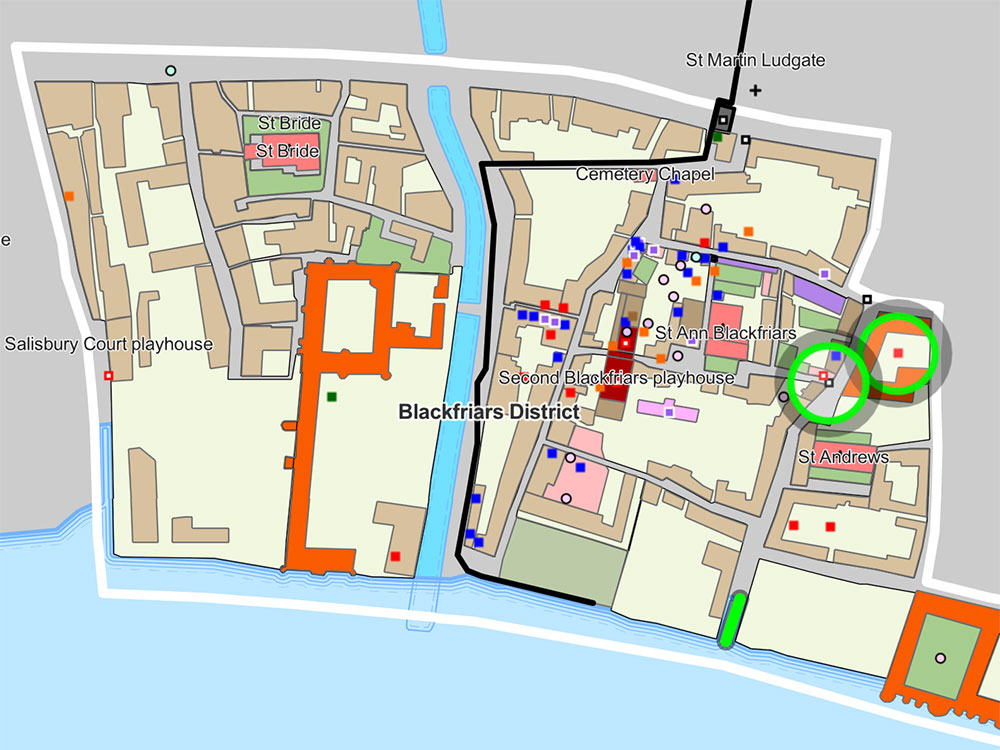
A discovery about Shakespeare's house in London, the focus of a Purdue research project on Shakespearean theater districts, has made international news this past week, leading up to Bard's birthday, celebrated on 23 April.
Professor of English, Paul White, director of the Purdue-sponsored project, Shakespeare's Theaterscape, reports that the project is about to go "live" with an interactive map of the Blackfriars theater district, which features the famed Blackfriars gatehouse leased by Shakespeare in 1613. In newly published research this week, Dr Lucy Munro of King's College London has conclusively shown the precise location and dimensions of the gatehouse residence and explored its implications for establishing Shakespeare's continuing presence in London, specifically at Blackfriars, after composing his comedy The Tempest around 1611. Her research has been widely covered this week in media outlets, including ABC News, The New York Times, and The Times.
Professor Munro is one of two renowned theater historians who are members of the Shakespeare Theaterscape team and have written on Shakespeare's Blackfriars theater. The other is Dr. Christopher Highley, whose book Blackfriars in Early Modern London has extensively researched the gatehouse and other sites and is editing the key records and mapping for Shakespeare’s Theaterscape.
Blackfriars holds a unique place in Shakespearean studies. Unlike the open-air playhouses more commonly associated with his work, the indoor theaters of this district were linked to more exclusive audiences and evolving performance styles. Establishing Shakespeare’s presence there strengthens the connection between his daily life and the artistic environments that influenced his writing.
As Purdue’s Shakespeare’s Theaterscape project prepares to launch, this moment highlights the global relevance of collaborative humanities research. Even more than 400 years after his lifetime, discoveries continue to reshape our understanding of Shakespeare not only as a writer, but as a figure embedded in a dynamic urban and cultural world.