Robert Sabol’s Human-Centered Vision for the Rueff School and Beyond
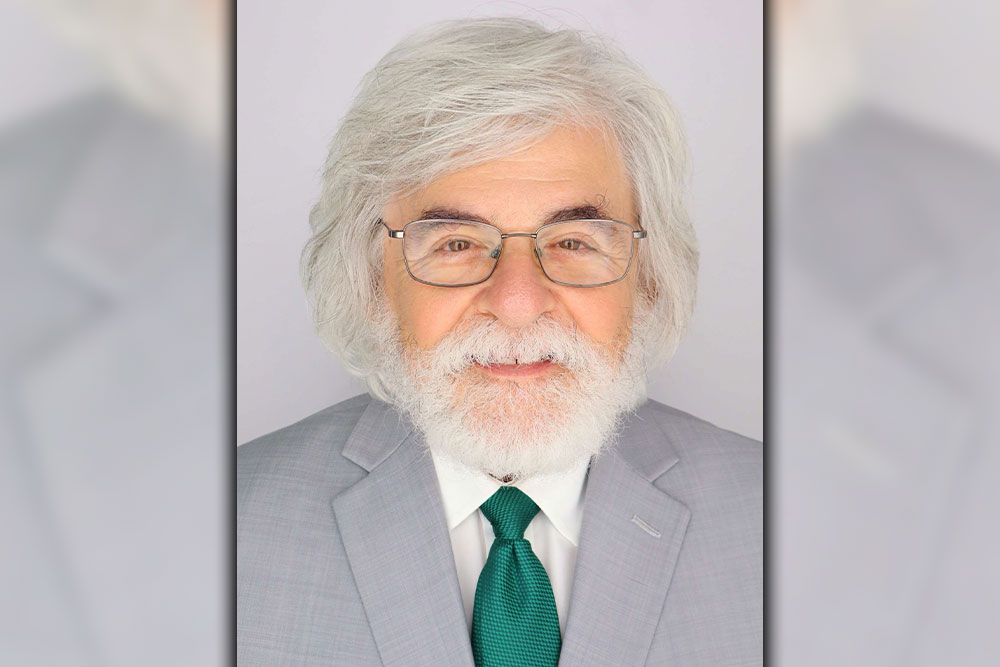
Robert Sabol is the associate head of the Patty and Rusty Rueff School of Design, Art, and Performance, a Dean’s Faculty Research Fellow and a professor of art and design and art education in the College of Liberal Arts. This year, he was appointed inaugural director of the Academy for Creative Endeavors (ACE).
Justin S. Morrill Dean of the College of Liberal Arts Chris Yeomans established ACE in September 2026 to demonstrate how creative scholarship directly serves Purdue’s mission. By providing dedicated funding for creative projects and campus events, the program aims to boost the visibility of research generated by Purdue’s arts faculty and students.
“ACE is trying to show that no matter what college or program you’re in, the arts give you a better education,” Sabol says. “That’s through exhibits, concerts, performances, readings and whatever other forms of artistic expression people engage in.”
Sabol believes the creative disciplines are essential elements of a well-rounded university experience that can lead to an abundance of opportunities.
“I never thought I would be teaching at a world-class university,” he says. “But a liberal arts education opens doors in ways you might not imagine.”
In 2022, the National Art Education Association presented him with the Elliot W. Eisner Lifetime Achievement Award. This honor recognizes an individual who has achieved records of distinction in research, teaching and service in the field of art education.
A first-generation college student, Sabol hopes current students will benefit from greater exposure to the arts the same way he did.
Becoming a Student of the Arts
Sabol grew up on the south side of Chicago bordering Northwest Indiana, in a region that was known for its massive steel mills and oil refineries.
“The possibility of going to college wasn't even in my thoughts while I was in high school,” he explains. “We all thought we would work in heavy industry, and we would be happy because all of our families had done that.”
But even from an early age, Sabol was engaged in art. His life was forever changed when his art teacher asked him to draw a picture of what made the region beautiful. Inspired, he interviewed an oil tanker captain and looked around.
“I saw beauty in the urban environment,” Sabol says. “When the steel mills would pour the slag down the side of a hill, the whole sky lit up with orange. It was like lava erupting. And then you'd hear the trains going by, and you saw cars parked on the side of the street that just rusted.”
He turned in the assignment and thought nothing of it until the high school principal and superintendent showed up in his class with a television crew.
Unbeknownst to Sabol, his teacher had entered his artwork in the Illinois Bell Telephone Company art contest. He had come in first place.
“They selected my work to be on the cover of the Chicago telephone book,” he explains. “So I thought, ‘oh, that's neat.’ But then she gave me the check. And all of a sudden, the possibility of going to college was on the table.”
Humanizing the Education Sphere
After finishing his bachelor’s in art education and spending 23 years teaching elementary art, Sabol completed his master’s and doctoral degrees. His groundbreaking dissertation on visual arts assessment established him as a leading national scholar. Later, his landmark national study on the impact of the No Child Left Behind Act caught the attention of federal officials, prompting invitations to present his findings to the U.S. Department of Education and members of Congress.
“Every statistic was right,” he says. “But my report stood out because I collected qualitative comments from the respondents. We always present points of value, but it’s the people representing those responses who make the data human.”
Sabol brought this human-first perspective to Purdue, where he prioritizes creating a supportive community that ensures every student feels they have a place. His art education program is affectionately known by students as “The Family.”
Sabol’s pedagogical framework rests on the belief that teaching requires discovering a student’s values, worries, priorities and learning styles. Unlike disciplines focused on convergent learning, he says the arts cultivate divergent thinking where students are encouraged to generate unique answers.
“In the arts, we're trying to come up with variety rather than conformity,” he explains. “And we account for that variety every time a student redefines the target and turns in a piece of artwork.”
Sabol challenges his students to go beyond becoming “common and ordinary” teachers and thrive instead to become “extraordinary” teachers who raise the bar and explore uncharted territory.
The Value of a Liberal Arts Education at Purdue
Sabol emphasizes that the liberal arts serve as an essential complement to STEM (science, technology, engineering and math) disciplines by merging technical skills with human empathy.
“Having a liberal arts background is the key to success for anyone in any other major at the university,” he says. “We're thinking about the philosophical side of every issue.”
According to Sabol, solving human problems involves more than practical knowledge; it requires us to ask why we do things in the first place. When artists and designers get a liberal arts education, they are challenged to analyze the human condition, giving them the tools and perspectives needed to transform basic physical objects into accessible human experiences.
“Take a doorknob, for example,” Sabol says. “Why might it need a lock? Why might it be harder for someone with arthritis to use? How do we make that more accessible? Industrial designers have to go beyond the doorknob and think about who’s going to open the door.”
He adds that education must extend beyond information delivery to focus on personal development. Liberal arts faculty encourage students to discover their values, embrace their individuality and pursue ambitious goals.
“Each person is unique, and we need to honor, respect and encourage that,” Sabol explains. “The liberal arts sharpen the blade that gets you where you need to go. They help you reach that extraordinary level.”