Purdue Researchers Collaborate Across Disciplines to Study Ancient Iron Smelting
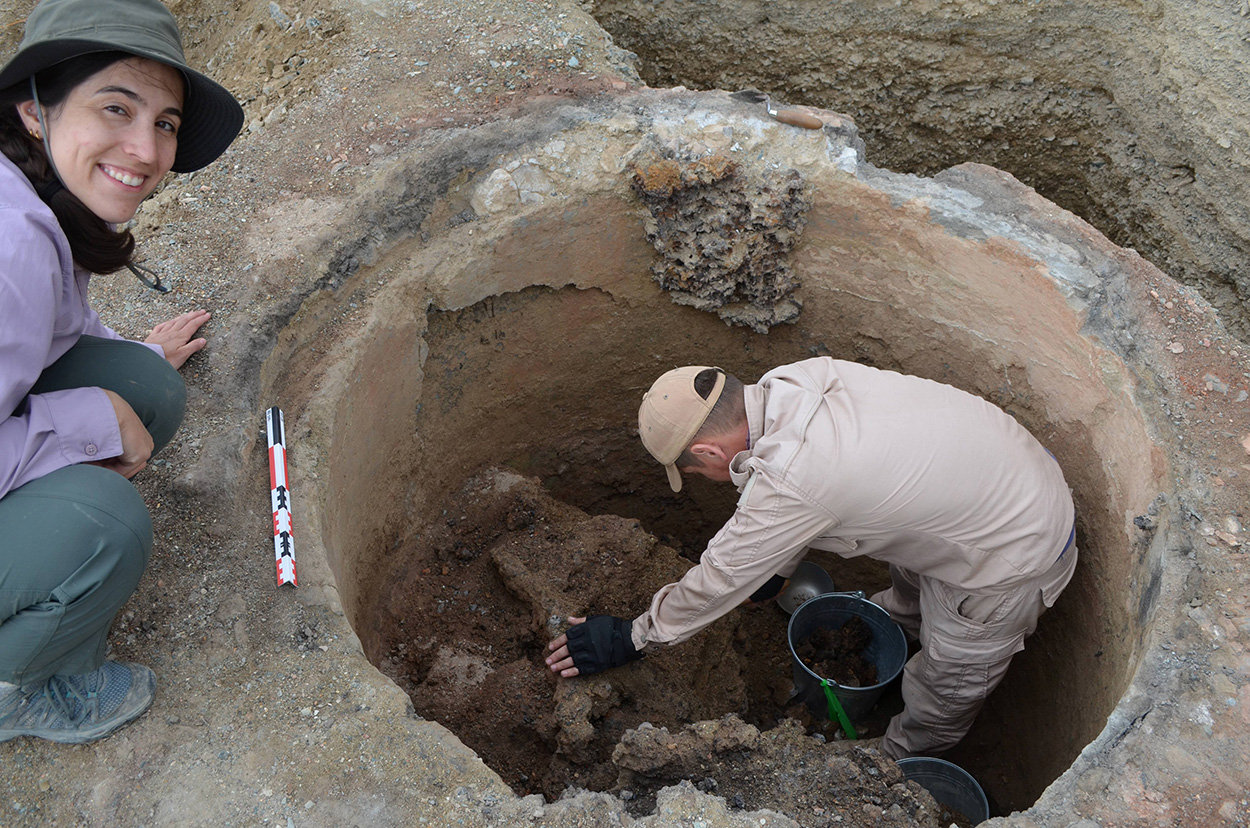
A Purdue-led archaeological project in Uzbekistan is bringing together researchers from the College of Liberal Arts, College of Engineering, and College of Science to investigate how iron was produced in one of the medieval world’s most important metallurgical regions.
This year’s field season at Abu Muslim Qala was led by Department of Anthropology professors Elizabeth Brite and H. Kory Cooper and graduate student Cassie Apuzzo. The team uncovered the remains of an ancient settlement and a large iron-smelting furnace that is now serving as the focus of collaborative research spanning archaeology, materials engineering, geophysics, and environmental sciences.
Located in the historic region of Khorezm, Abu Muslim Qala sits along trade routes that connected Central Asia with the Middle East and northern Europe. During the Islamic Golden Age (8th–13th centuries A.D.), Khorezm was a major center of trade, art, science, culture, and technological innovation. The site contains a mud-walled fort dating back at least 2,000 years, as well as a large surface concentration of slag, the glassy waste debris created when ore is heated in a furnace to separate metal from non-metallic components.
During this season’s field work, the team excavated an iron furnace approximately 1.5m deep and 1.5m in diameter, containing 600 kilograms of slag. The furnace provides new evidence for understanding how iron production supported regional economies and technological development during the medieval period.
Findings from the excavation are being examined by researchers across Purdue, combining archaeological evidence with advanced materials and geophysical analysis.
Researchers in Purdue’s School of Materials Engineering, including Professors Nik Chawla and Mohamad Zbib, will analyze newly recovered slag alongside material collected during previous field seasons. Their work will help reconstruct ancient production methods and provide insight into the technologies that helped make Central Asian steel highly valued throughout the medieval period.
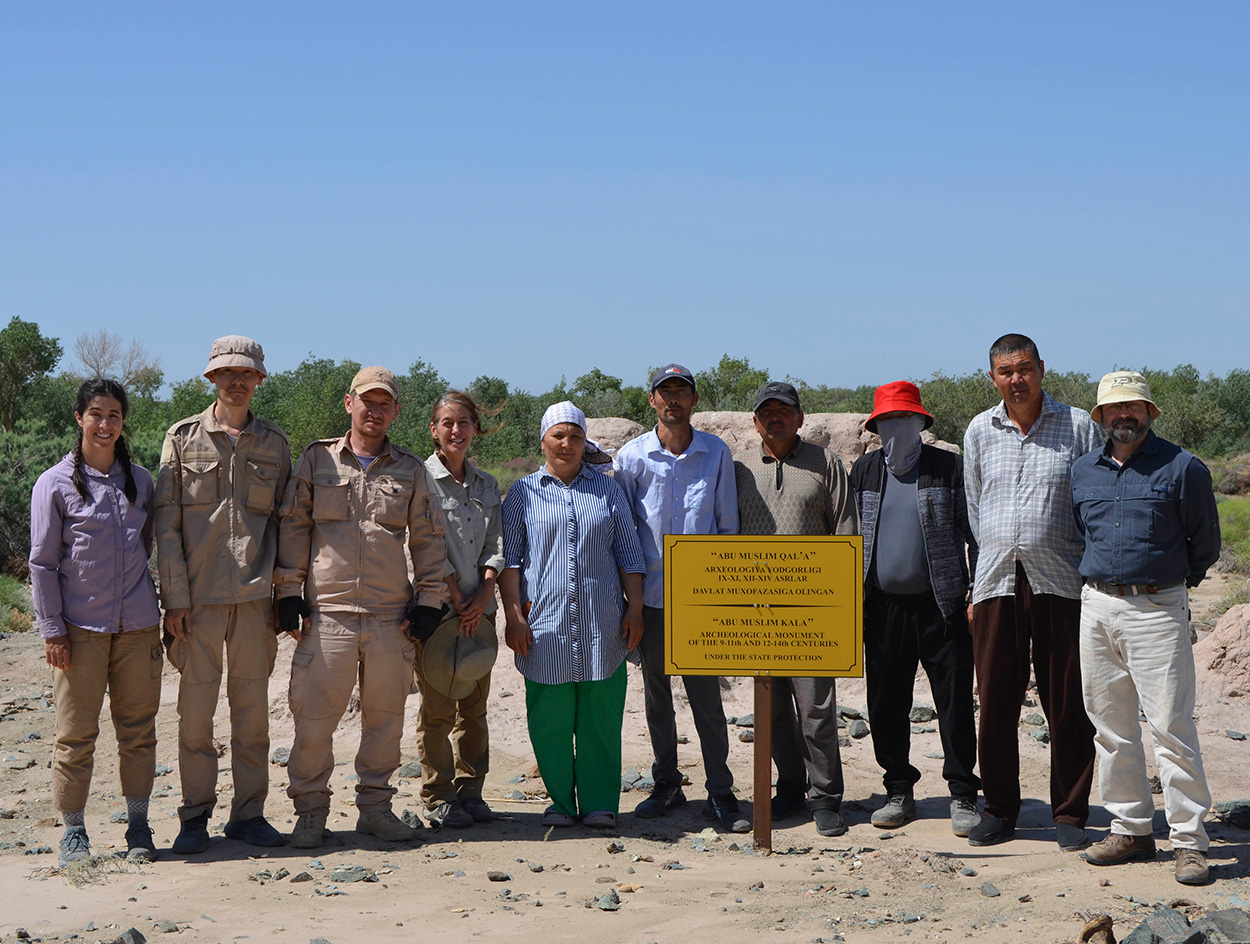
The project also draws on expertise from Purdue’s Department of Earth, Atmospheric, and Planetary Sciences. Professor Ali Bramson and Graduate Student Sam Harris assisted the team in using Ground Penetrating Radar to identify buried features and guide future excavation. This allows researchers to locate areas of archaeological interest while minimizing disturbance to the site.
In addition, Ohio State University arcaeobotanist Sydney Hunter will examine charcoal recovered from the furnace to identify the fuel sources used in iron production and explore their environmental impacts.
Although iron smelting originated more than 3,000 years ago, Central Asia has long been associated with important metallurgical innovations. At the time when Abu Muslim Qala was inhabited, the region was renowned throughout the medieval world as a source for steel, an alloy of iron and carbon. With its ability to flex without breaking, steel was especially useful for tools and weaponry like swords.
The project demonstrates how the College of Liberal Arts serves as a catalyst for interdisciplinary research, bringing together scholars from across Purdue to address complex questions about the past. By combining archaeological excavation with materials analysis, geographical surveying and environmental research, the team is developing a more complete picture of how ancient industries operated and how technological knowledge moved along the trade routes that connected medieval societies.
Through collaborations that span multiple colleges and disciplines, Purdue researchers are uncovering new evidence about the technologies and industries that helped shape one of the medieval world’s most important centers of innovation.