Purdue Institute Trains Graduate Students to Unlock C-SPAN's Vast Video Archive
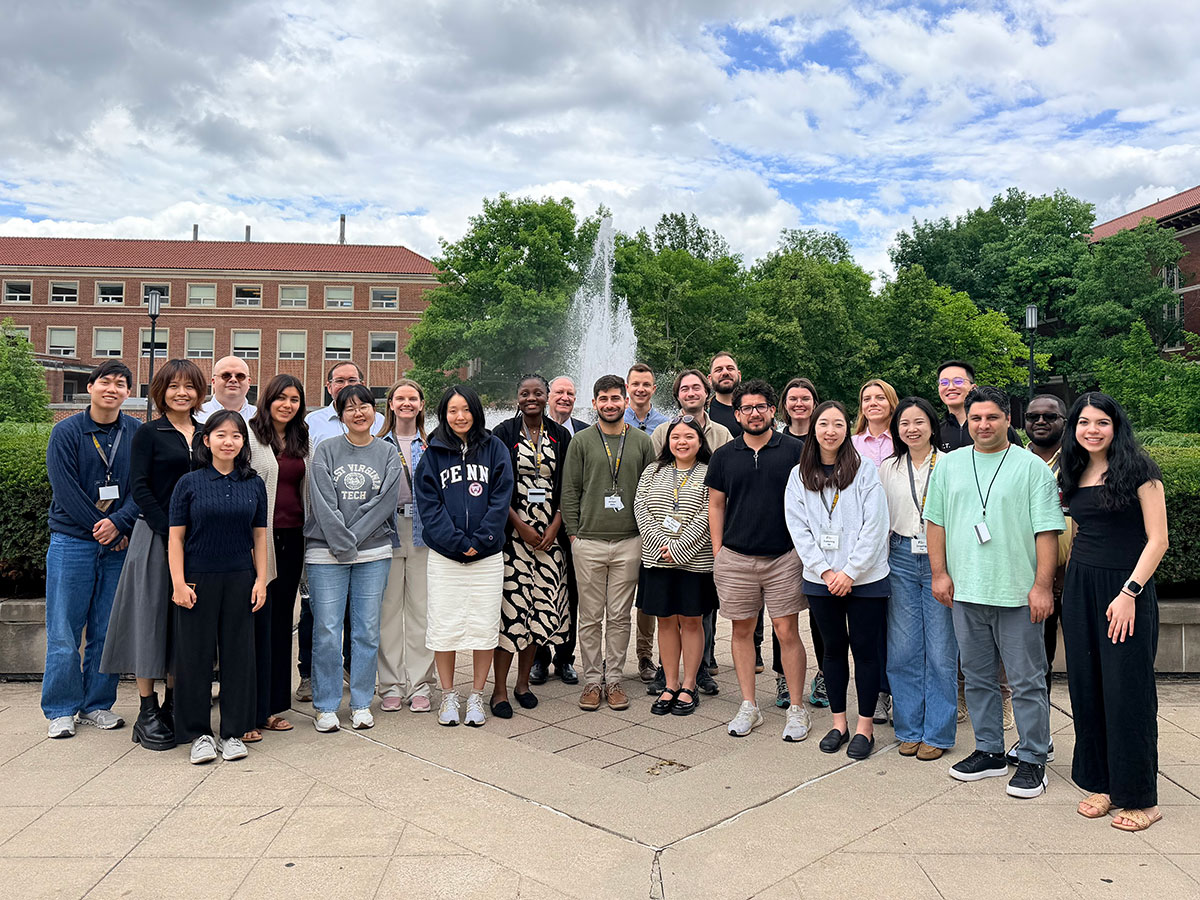
Roughly two dozen graduate students from universities across the country and abroad came to Purdue in June for the Video Research Institute, a weeklong training in analyzing the words, voices and video of the C-SPAN Video Library's more than 300,000 hours of American political life.
The library, housed in West Lafayette, is one of the richest data sources in the social sciences. Most researchers who utilize it only focus on the transcripts, but the institute taught students to harness all of it — the words, the voices and the video itself.
The event was held June 15-19 and hosted by the Center for C-SPAN Scholarship & Engagement (CCSE) in the Brian Lamb School of Communication, part of Purdue's College of Liberal Arts. The institute was led by Dr. Bryce J Dietrich, Associate Professor of Political Science and Research Scholar at the CCSE, and Dr. Robert X. Browning, the CCSE faculty director and Professor of Political Science and Communication. The attendees, selected from a pool of more than 70 applicants, came from universities including Harvard, Princeton, MIT, Oxford, UCLA and Duke; four Purdue students also took part. Most participants were doctoral students in political science, joined by students in communication, journalism, public policy, public relations, sociology and linguistics.
Putting the collection in researchers' hands is central to the CCSE's mission. "There is no other scholarly resource quite like the C-SPAN Video Library — it lets you see American politics as it actually happened, not just read about it," Browning said.
Each day of the five-day program unlocked a different layer of the same footage. After a first day spent getting comfortable with the computing tools, students began with the words, analyzing transcripts of congressional floor speeches using the same family of technology that powers AI chatbots and search engines.
Analyzing the sound of those speeches was the next step. Using a listening model developed by Meta, students taught computers to pick up the qualities of a voice — such as pitch, pace and intensity — that people may hear as hostile.
"Politics is so much more than the words in a transcript," Dietrich said. "How something is said — the edge in a voice, a pointed finger, the pacing of a delivery — carries real meaning, and these tools finally let social scientists measure it at scale."
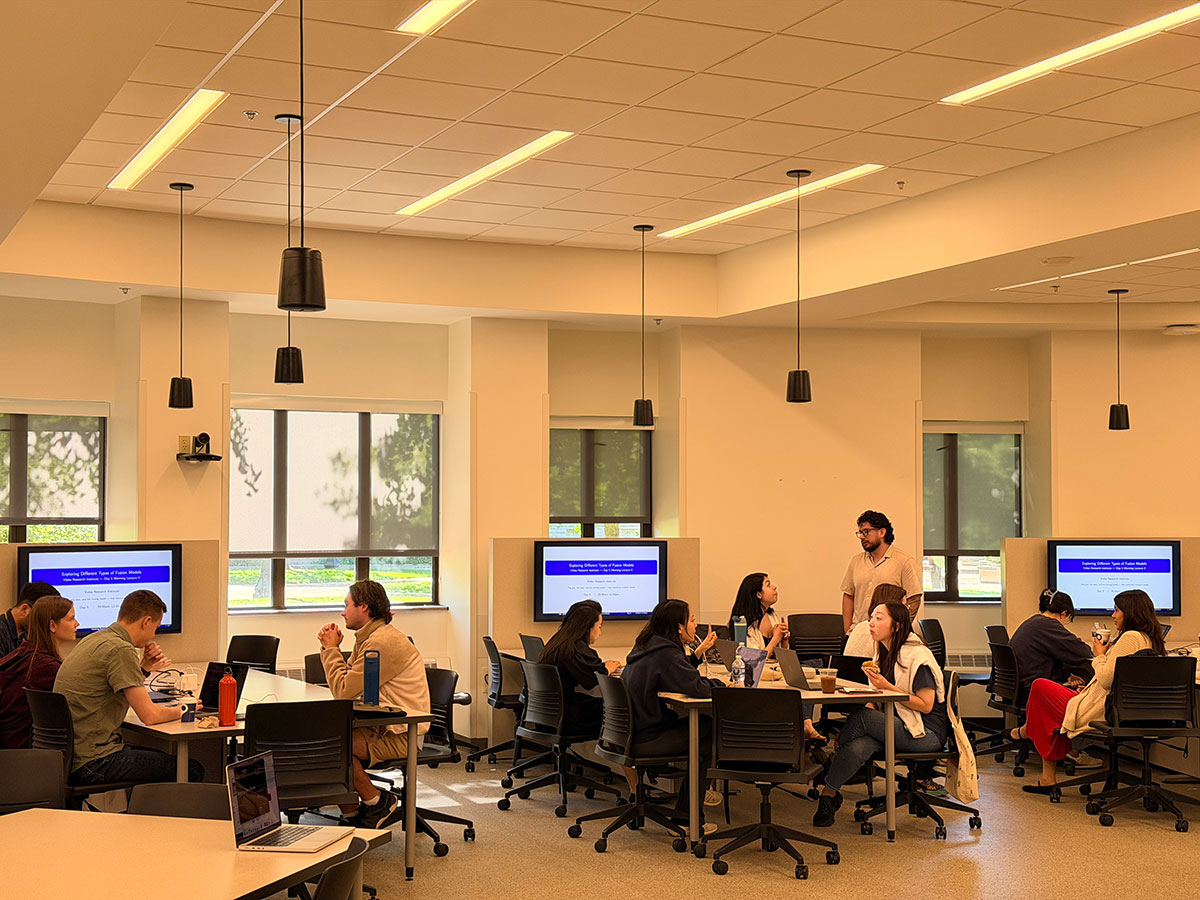
Then came the pictures on the screen. With models originally built to recognize objects in photos, students studied lawmakers' body language: the gestures and expressions that accompany what they say.
On the final day, students brought it all together, combining words, voice and image in a single model and ended with student research presentations.
Throughout the week, students ran real jobs on Anvil, Purdue's National Science Foundation-funded supercomputer at the Rosen Center for Advanced Computing. The institute covered key foundations but kept the focus on hands-on research: students worked in small groups to read and adapt code, and each day ended with a friendly check of which group's model performed best.
"My favorite moment of the week was watching students run their first model on a supercomputer," Dietrich said. "When a political scientist, a sociologist and a linguist are huddled around one screen waiting for a result to come back, that's when you know the week is working."
Students also learned to test where AI can already be trusted. They had open-source large language models label the same speeches the class had labeled by hand, then compared the two head-to-head on a shared benchmark set. The models handled text well and performed passably with video, but proved not yet reliable at listening to audio. Keeping humans in the loop was one of the key themes of the week.
“The video research techniques I learned and practiced in the classroom using C-SPAN content are skills I will continue to apply to my research projects and, ultimately, my dissertation.” said Briana Garcia, doctoral student in the Department of Political Science at the University of Michigan. “I highly recommend attending Purdue to gain exposure to innovative scholarship and diverse academic perspectives that are invaluable in shaping your development as an emerging scholar.”
Attendees received free dormitory housing and meals, which would not have been possible without the support of the C-SPAN Education Foundation, the Brian Lamb School of Communication and Purdue's College of Liberal Arts.
Students left West Lafayette with a deeper appreciation of what the C-SPAN Video Library holds, the tools to turn it into cutting-edge research — and a new cohort of collaborators ready to do that work together.
The center will host its national research conference in 2027, with details to come on the CCSE website. The Video Research Institute will return in summer 2028.