One Alumna’s Journey From Public Service to Patient Advocacy
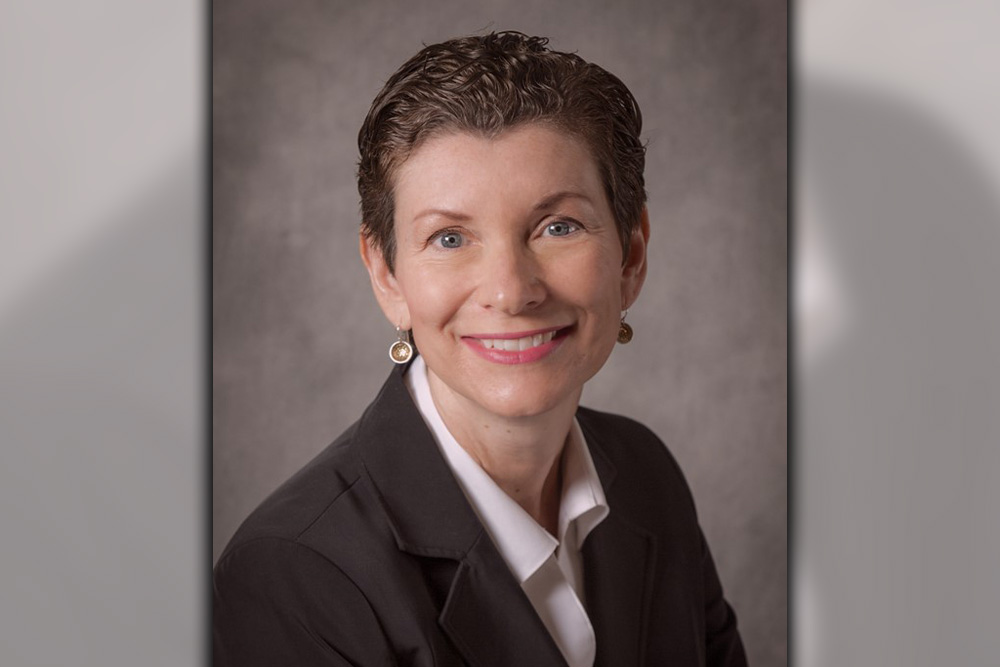
Susan Brock Williams (LA '90) was diagnosed with breast cancer in 2016. She received a medication that eliminated the tumor before her surgery. Years later, when an opportunity arose to advocate for patients at Eli Lilly and Company, she knew what access to medicine could mean for someone waiting for it.
“I was a patient. I took a medication that saved my life,” Williams said. “If I can help a patient, even one, because of our medicine, oh, it’s so worth it.”
Williams, a Purdue political science alumna and 2025 College of Liberal Arts Distinguished Alumna, had already spent decades advocating for others. She helped advance rights for crime victims, guided Purdue students as they worked to pass an important law and represented the university on major academic policy and budget issues. At Lilly, that lifelong commitment to helping people took on new meaning.
A mission made personal
After 19 years representing Purdue, Williams felt the time was right to retire, then briefly returned to government relations to represent Indiana State University. A friend she met through her Purdue sorority told her about an opening at Lilly, leading Williams to begin a new chapter in life sciences.
Today, she works in state government affairs, advocating for patients’ access to medicine. Although the subject matter was new, the purpose felt familiar. Williams had spent her career considering how decisions made by institutions affect the people who live with them. At Lilly, she brought that same perspective to patients whose health and lives may depend on access to treatment.
“That’s why I love what I do, because I’m helping patients,” she said.
The path to that work began at Purdue.
Finding a path to public service
Williams arrived at Purdue in 1986 planning to study political science, attend law school and eventually work on policy in Washington, D.C. During her senior year, a walk through the Purdue Memorial Union changed her route.
At a campus job fair, a table of young people recruiting for the Governor’s Fellowship Program drew her in. The program offered a year of experience in Indiana state government. Williams applied and, when she was accepted, switched to night classes for law school.
The fellowship took her from meetings with state employees about their retirement benefits to parole hearings and, finally, the governor’s office. Watching the legislative process unfold during the 1991 session, she knew she had found her work.
“I was hooked immediately,” she said.
Williams stayed in state government, first helping the state’s emergency management agency respond to disasters and later working in the attorney general’s office. There, she helped develop language for an amendment to the Indiana Constitution establishing rights for crime victims. Across those roles, the purpose of public service stayed clear to her.
“When you’re at your lowest, government can be there to help you,” she said.
Her College of Liberal Arts education prepared her to navigate the complex issues she would encounter throughout that career. Political science taught her to analyze large amounts of information, communicate clearly and make an argument respectfully.
“Trying to make sense of very complex things that you deal with from a policy perspective is something I learned at Purdue,” Williams said.
Keeping students at the center
After roles in state government and the private sector, Williams returned to Purdue as a government relations professional. During her time at Purdue, she represented the university to state leaders while making a point to listen to the students affected by those decisions.
“I was representing the Purdue administration and our positions on different policy matters, but you can’t forget your experience as a student,” Williams said.
One group of students approached her with an idea that became especially meaningful to her career. They wanted to address a fear that could prevent someone from calling 911 for a friend who had been drinking. Williams helped them navigate the legislative process as they advocated for what became the Indiana Lifeline Law.
“It was really cool because they did all the work,” she said. “I was just advising.”
Years later, Williams encountered one of those former student leaders at a Lilly event. Hearing how much the experience had meant to him reminded her that although the people and policies have changed throughout her career, the purpose behind her work has not.
From crime victims and Purdue students to patients seeking medicine, Williams has kept the people affected by policy at the center of it.
“We’re all just trying to make the world a better place, really,” Williams said.