How Emily Buehler’s Communication Research Supports Student Success
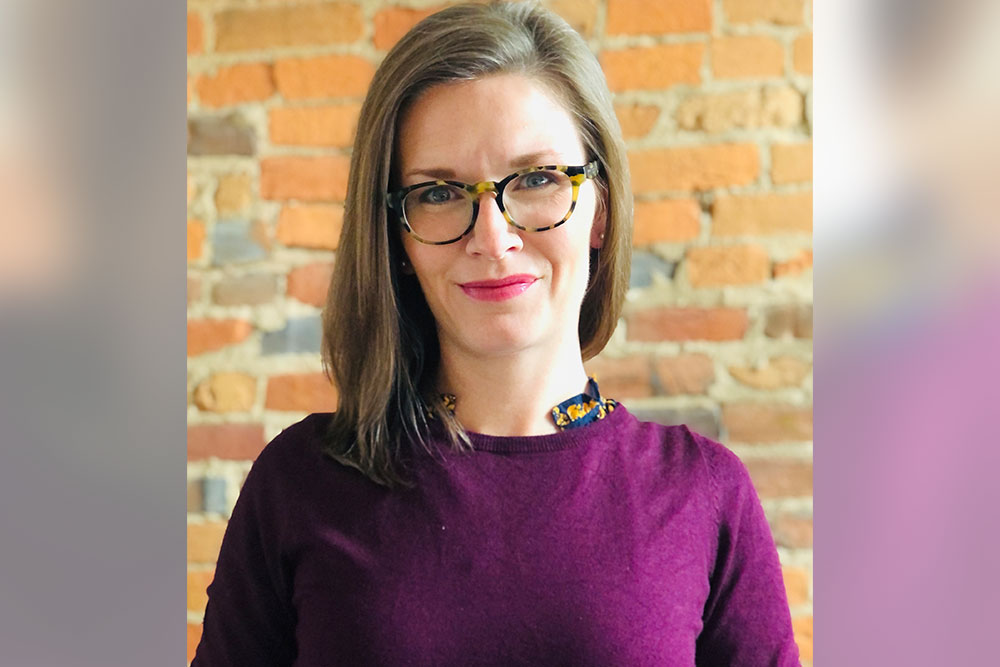
Dr. Emily Buehler, assistant professor of communication and member of Purdue’s Steps to Leaps Research Collaborative, is helping students better understand one of the most powerful tools for maintaining a sense of belonging: communication in close relationships.
After enrolling in a course on relationships and health during her graduate studies, Buehler discovered research showing that the quality of our relationships and our communication within them can significantly influence both physical health and emotional well-being.
“My mind was blown at how important interpersonal communication is to quality of life,” she says.
Strong relationships are linked to outcomes like improved immune function and longer life. The experience reshaped her understanding of social science, revealing that human communication patterns can be studied systematically and scientifically.
Today, Buehler brings that insight into the classroom through courses such as COM 372 (Communication in Relationships). Students explore how close relationships shape identity and expectations in emotional experiences. They examine everything from how people express affection and support to how they navigate conflict and reconciliation.
“Each student emerges as an expert who's able to make informed recommendations for improving relationships,” she said.
Researching Relationships
Much of Buehler’s research focuses on support seeking in everyday life. She studies all kinds of problems, from roommate troubles and disappointing grades to invisible and stigmatized health conditions or identities.
She explains, “seeking support for problems with a roommate versus for some health condition that people may not be able to see is going to look really different.”
Buehler emphasizes that the problems people face inform their methods and expectations going into support-seeking interactions. “Do they want somebody to say, ‘oh man, that sucks, I'm sorry,’ or do they just want somebody to listen while they vent about how bad their week has been?”
Her research also examines how communication technologies shape these interactions. Through experiments simulating everything from social media posts to video chats, Buehler has come closer to understanding what kinds of messages and interactions are likely to elicit high-quality support.
In one study, Buehler asked friends to talk over video chat.
“I wanted to see if anything about the technological devices they used, like a small screen or a big screen, would impact how the supportive conversation goes,” she explains. Through methods of coding and quantifying communication in the transcripts, she found that the size of the screen may not matter as much as the lighting conditions in the room.
“Some people were in clear lighting where they could see their friend during the video chat,” she says. “In the other condition, we turned the lights lower, so you could really only make out a silhouette and not see all the facial expressions and body language of the friend.”
The lighting quality affected perceptions of social presence, which Buehler describes as “how much you feel like another person is right there with you even though they’re not.”
Based on participants’ own evaluations, Buehler concluded that being able to see friends clearly on FaceTime can result in perceptions of higher quality support.
Another study reveals the importance of receiving support from a variety of people regardless of closeness.
"When you’re closer with people, you’re often a lot more comfortable getting into more personal and emotional sort of content,” Buehler says. At the same time, evidence from her research suggests that “even with strangers, sometimes people will open up a lot, because it feels like there's less of a risk.” In other words, each kind of interpersonal relationship can provide unique benefits to those seeking support.
Seeking Support in Liberal Arts
Buehler points to the environment within the College of Liberal Arts (CLA) as a key example of this dynamic. Whether through personal or academic connections, students are encouraged to seek guidance in ways that meet their individual needs. She believes the nature of CLA classes prepares students to cultivate strong support systems, having a lasting impact on both their mental and physical health.
“I think because students are engaged in discussion, doing projects, getting to know one another and learning about how to improve the human experience, they’re getting more support from each other and from their professors,” Bueler explains.
As her final message, Buehler wants to emphasize that “being connected to others is important for our well-being. Friends, coworkers, family, maintaining good connections — I just encourage people to make sure they're getting their support needs fulfilled.”
May is Mental Health Awareness Month. Help is available. Call 988 day or night.