Congressional Briefing on the History of AI, Privacy and Security
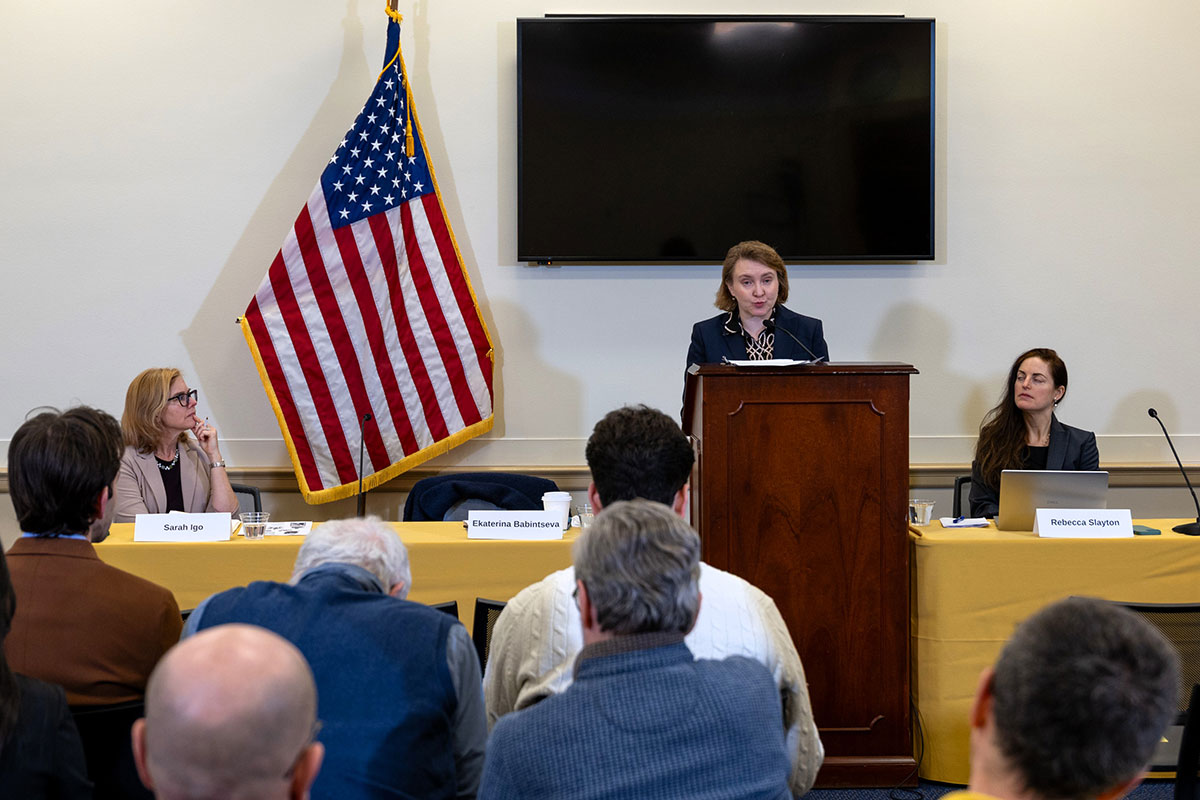
The Center for American Political History, Media, and Technology co-sponsored a congressional briefing organized by the American Historical Association on the history of artificial intelligence, privacy and security.
The discussion looked at how people’s ideas about privacy and national security have evolved alongside technological change. From early inventions like cameras and telephones to today’s AI tools, chatbots and deepfakes, Americans have had to decide how to engage with new technology while also protecting personal, financial and biometric data. The conversation highlighted how earlier moments of technological disruption prompted legal and policy responses, offering historical context for evaluating the strengths and limitations of current U.S. privacy and regulatory frameworks in the age of AI.
Panelists considered how decisions to limit federal privacy oversight and prioritize commercialization of the internet shaped the data-rich environment that powers modern machine learning. In addition, the conversation challenged simplified narratives about AI’s development, emphasizing the diverse research communities and national security priorities that influenced machine learning’s evolution. Throughout, the discussion underscored the longstanding and deeply intertwined relationship between privacy, surveillance, technological innovation and national security.
The event featured Purdue professors:
Ekaterina Babintseva, panelist, an assistant professor of history.
Kathryn Cramer Brownell, moderator, professor of history and director of the Center for American Political History, Media, and Technology.
Aaron Mendon-Plasek, panelist, assistant professor of history.
It also featured Rebecca Slayton (Cornell University) and Sarah E. Igo (Vanderbilt University).
The briefing aired on C-SPAN2 on May 16, 2026. Watch the recording.