Beyond Nature Versus Nurture: Robbee Wedow Charts a More Complex Future for Behavioral Genetics
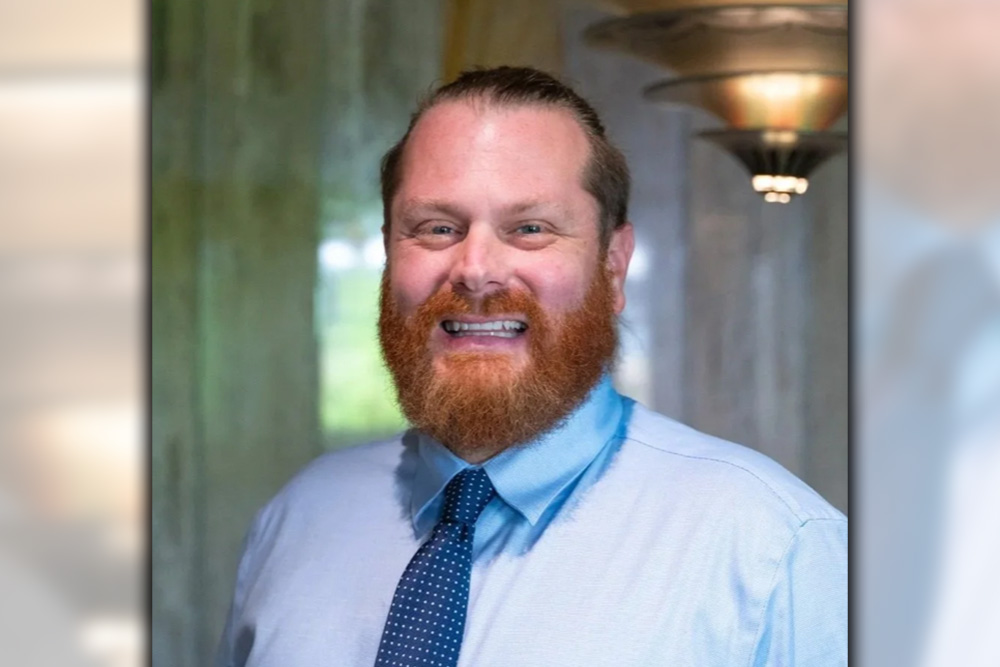
For decades, questions about genetics and human behavior have often been framed as a debate between nature and nurture. Purdue sociologist Robbee Wedow and an international team of researchers argue that science has moved well beyond that divide.
In a recent peer-reviewed Comment in Nature Genetics, Wedow and his coauthors (including a previous College of Liberal Arts postdoc Katie Thompson) describe a new direction for behavioral genetics that focuses on how genes, environments, social conditions and data on families work together to shape human behavior and health. They also call for closer collaboration among geneticists, social scientists and researchers across other fields to understand these relationships.
Wedow is an assistant professor of sociology and data science at Purdue’s College of Liberal Arts, with a courtesy appointment in Purdue’s Department of Statistics. His research in statistical and computational genetics and sociogenomics brings genetic data and methods to questions about human behavior, health and social environments.
The Comment, “The need to consider complexity in the future of behavioral genetics,” argues that one of the field’s most important challenges is interpreting what genetic effects mean. A genetic association does not necessarily represent a pure biological process. Genetic patterns can be intertwined with family environments, demographic differences, social stratification and other features of the societies in which people live.
New research methods are making it possible to investigate these relationships more carefully. Studies that compare siblings and multiple generations within families, for example, can help researchers distinguish among genetic influences, family environments and broader social processes. Other approaches examine how genetic and environmental influences change across the life course and address the challenges of applying genetic findings across different populations.
These advances are changing the kinds of questions behavioral geneticists can ask. Rather than treating genetic influence as the endpoint of an investigation, Wedow and his colleagues argue that genetic information can become a tool for understanding the pathways that produce differences in behavior and health.
That shift also creates a larger role for the social sciences. The authors call for research that connects information across levels ranging from cells and brains to individuals, families and societies. Understanding a genetic finding may require knowledge of sociology, psychology, policy and demography alongside biology and genetics.
Wedow mentioned that “Genes don’t operate in a vacuum. Their effects unfold within families, environments and societies, so understanding genetics also requires understanding the social world. Bringing social science and genetics together can help us better understand not just whether genes matter, but when, where and why they matter.”
Wedow is part of a broader group of researchers at Purdue and elsewhere exploring connections among genetics, epigenetics, health and the social sciences. Their work reflects growing interest in bringing biological and social data together to understand how human outcomes develop within families, institutions and communities.
The Comment also argues that this complexity needs to reach classrooms and public discussions. Simplified descriptions of a trait as “genetic” can encourage the mistaken idea that genes determine individual outcomes. The authors warn that such interpretations can contribute to misinformation and misuse of genetic research.
Wedow has also worked to address that challenge through genetics education. He received the 2026 Education Award from the American Society of Human Genetics for contributions that include his work with the Humane Genetics Curriculum, which teaches students about human genetic variation while emphasizing the complex influences behind human traits.
For Wedow and his colleagues, the future of behavioral genetics lies in understanding that complexity. As genetic data and analytical methods become increasingly powerful, collaboration between genetics and the social sciences can help researchers ask better questions about how biology, experience and society combine to shape human lives.