A Boilermaker’s Journey From the Court to Business Owner
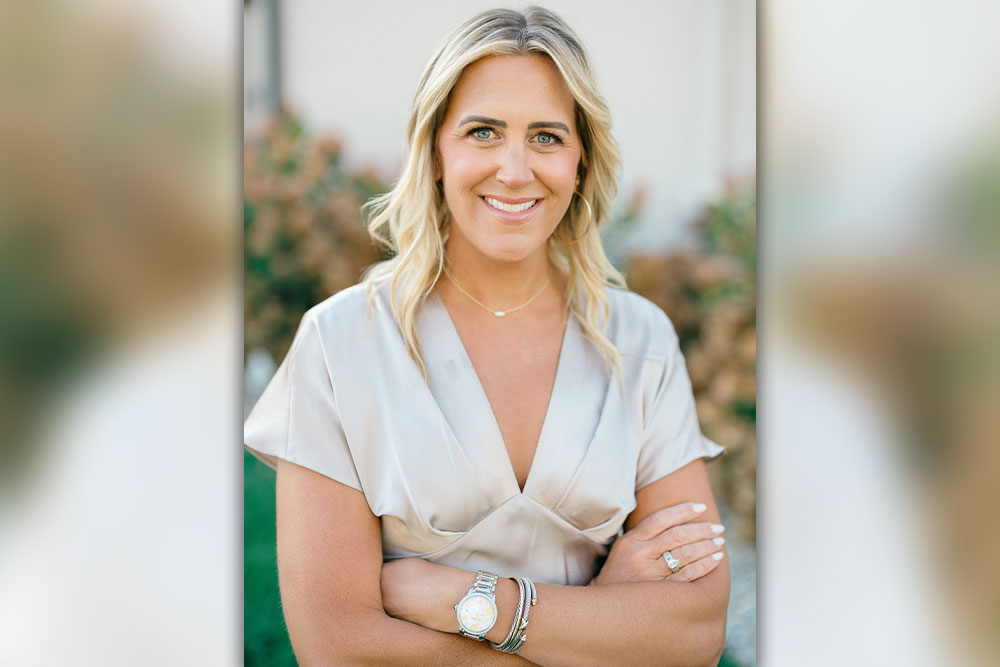
Twelve years into her WNBA career, Katie Douglas wasn’t thinking about business ownership. She was thinking about recovery.
Injuries had begun to pile up, and while rehabbing in Florida , home to Orangetheory Fitness’s headquarters, Douglas decided to try a class.
“It was completely life-changing,” she said.
What started as a workout quickly became something more. Douglas found herself drawn not only to the science-backed, technology-driven training model, but also to the business behind it. That single class would eventually spark the next chapter of her career.
But long before she stepped into entrepreneurship — and long before she helped lead Purdue to a national championship — Douglas stepped onto Purdue’s campus for the first time and felt at home. Whether it was the campus, the team, or the atmosphere, everything aligned with her internal compass.
“Pretty immediately, it felt like the place where I needed to be,” she recalled.
That instinct to trust in whatever “felt right” would guide some of the biggest decisions of her life.
Douglas arrived at Purdue undecided about her academic path. Like many first-year students, she wasn’t certain where her interests would lead. Conversations with coaches, academic advisors, and mentors opened doors to new possibilities and through it all, communication stood out.
“It just felt good,” Douglas said. “It felt natural. It felt familiar.”
That feeling, much like the one she had when she chose Purdue, confirmed she had found her path. Through the College of Liberal Arts, Douglas began building the foundation that would support her long after her playing days were over.
When she reflects on her Purdue experience, Douglas highlights the life skills she developed, including time management, strategic planning, networking, public speaking and confidence to step outside of her comfort zone.
“College was more than just the classes,” she said. “It taught me how to manage my day-to-day, how to have conversations, how to build relationships.”
Those skills quickly proved valuable when Douglas moved to the professional stage.
After graduating, she entered the WNBA, first with the Connecticut Sun and later the Indiana Fever. The jump to professional basketball brought more than tougher competition. It meant media interviews, press conferences, community events and leadership responsibilities.
Her communication background prepared her for all of it. The presentations and discussions she once navigated in Purdue classrooms translated to poise and confidence in the public spotlight.
But Douglas wasn’t done evolving.
As her playing career progressed, the question of what came next slowly began to take shape. While her father had been an entrepreneur, owning a business wasn’t something she initially planned. Yet the more she learned about Orangetheory’s model during her time in Florida, the more she saw an opportunity.
Instead of waiting for retirement to figure out her next move, Douglas got proactive.
She sat down with her financial team and advisors, presenting her ideas the same way she had done in Purdue classrooms years earlier. She asked tough questions, offered counterpoints and built a legal and financial team to turn the vision into reality.
“It literally started with having those initial conversations,” Douglas said. “Being able to present what I wanted to do.”
Today, as the owner and operator of three Orangetheory Fitness franchises, communication is central to everything she does. And while some might not immediately connect a liberal arts degree with entrepreneurship, Douglas sees a clear link.
“You can talk to any employee in any organization, and one of the top things they either love or hate about it is communication,” she explains.
For Douglas, clear communication is central to her leadership. She describes herself as highly communicative with her staff, ensuring everyone understands their roles, stays informed and feels supported. She reinforced a team-first mentality, a value she developed both in athletics and through her liberal arts education.
The culture she built reflects that approach. Several employees who joined her in the early days are still with her today, a testament to the trust and relationships she’s fostered.
While basketball shaped much of her early life, Douglas emphasizes the importance of building an identity grounded in education as well as sport. When reflecting on her collegiate years, she would tell herself to dive even further into the academic program to explore her interests more fully.
And when asked about the value of her liberal arts degree, she doesn’t hesitate.
“It’s invaluable,” she said. “One of the best decisions I’ve made.”
Her advice to current students is simple: no matter what career path you ultimately choose, the skills you develop will travel with you.
“You’ll have a lot of tools in your toolbelt,” she explained. “No matter what career path you actually end up taking.”