50 Years of the Purdue OWL Helping Writers Find Their Voice
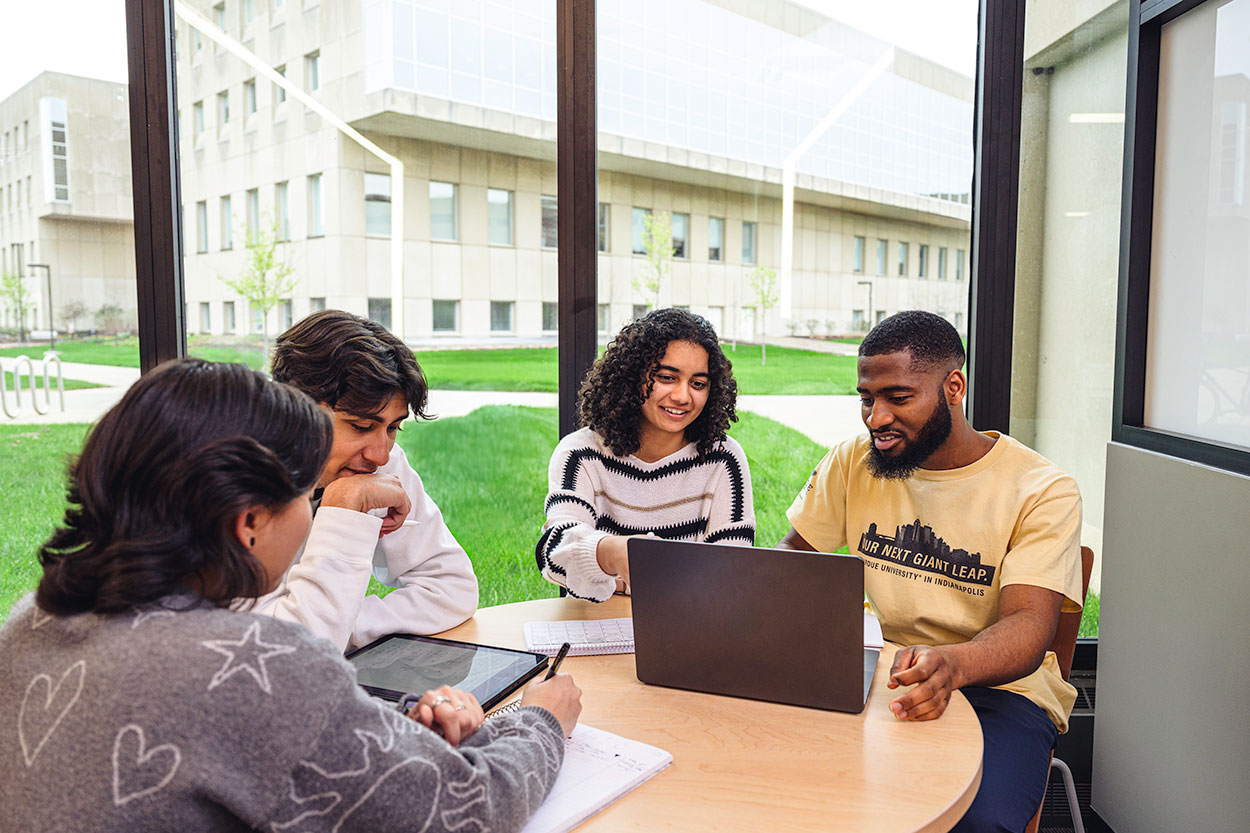
For 50 years, the Purdue OWL has helped writers do more than find the right words. It has helped them develop ideas, strengthen arguments, navigate unfamiliar writing challenges and build confidence in their own voices.
What began as a laboratory to explore methods to help students struggling with college writing in Purdue University's Heavilon Hall in 1975 has grown into an internationally recognized resource, reaching writers around the world while continuing to provide personalized support to the Purdue community.
While millions recognize the Purdue OWL for its online writing and citation resources, its impact extends far beyond the website. Through consultations, workshops and educational programming, the Purdue OWL supports writers at every stage, from developing ideas to responding to feedback.
As the Purdue OWL celebrates its 50th anniversary, director Harry Denny reflects on the writers it has supported.
“Every chance I get, every audience I’m with, I share that the hidden richness of the Purdue OWL rests in the reality that the website is a testament to the ordinary sessions that writers and consultants have with one another. Every resource grows out of powerful teaching and learning moments where people hash out the best ways to communicate and reach audiences through effective documents.”
From one classroom to a worldwide resource
The Purdue OWL began as the Purdue Writing Lab in 1975 under the leadership of Muriel Harris, who worked alongside graduate students to provide individualized writing support. Over time, its approach expanded beyond grammar and mechanics to emphasize developing arguments, understanding audiences and navigating different writing genres.
In the 1990s, the program began sharing educational materials electronically, laying the foundation for the online resource recognized worldwide today. Its first reported online traffic in 1995 totaled 27,921 hits. Today, the website records hundreds of millions of pageviews, connecting Purdue's writing expertise with audiences around the world.
Through five decades of changing technology, teaching methods and student needs, one principle has remained central: Writers benefit from working with other writers.
“No matter how technology evolves, and regardless of the changes in how and where we communicate, writers always need others to bounce ideas off of, and they also need other to pushed them to address potential audiences and other ways of thinking,” Denny said. “Each generation might bring new tools and different awareness; however, the need to modulate and shape rhetoric remains perennial.”
A legacy that extends beyond Purdue
Beyond its worldwide online presence, the Purdue OWL's impact can be seen in the generations of writers, educators and consultants who have carried its lessons into classrooms, careers and communities.
For Richard Sévère, now a dean at Purdue University Northwest, working as a Purdue OWL writing consultant helped shape his approach to teaching. After leaving Purdue, he established a writing center in New Jersey modeled after the program's collaborative approach. One of his student consultants later brought that philosophy to a high school writing center.
"The work that we were doing and how we were trained was to help students be more confident about writing," Sévère said.
As writers' needs evolved, so did the Purdue OWL's programming. Michelle Campbell, a former doctoral student and staff member, helped develop resources for multilingual writers alongside colleague Vicki Kennell. Their work eventually led to the Intensive Writing Experience, supporting graduate students navigating the challenges of academic writing.
"It's not just the writing, it's all of the emotions, all of the identity, all of the hopes and fears for your future that gets wrapped up in the dissertation writing process," Campbell said.
For recent Purdue graduate Anushka Majety, the Purdue OWL offered an opportunity to put that philosophy into practice. Her first independent consultation involved helping a student prepare a TEDx speech, one of many experiences that showed her writing support extends beyond traditional academic assignments.
"It's about helping someone grow as a writer and sharing the gift of writing with other people," Majety said.
The next 50 years
The tools writers use have changed dramatically since 1975. Typewriters gave way to computers, printed handouts became online resources and artificial intelligence has introduced new possibilities and questions about writing.
As the Purdue OWL looks toward its next 50 years, its future will involve new technologies, audiences and approaches to teaching writing. But the ability to develop ideas, construct meaningful arguments and communicate effectively remains essential.
“As long as we live in world where writers across the disciplines and writers developing a variety of documents need help getting started, understanding a rhetorical context, imagining groups of people for message and refining prose for specific moments, the Purdue OWL will be available on-campus and online to meet our students, faculty, staff and communities where they are,” said Denny.
From a converted classroom in Heavilon Hall to an internationally recognized resource, the Purdue OWL's legacy is measured not only in the millions who have accessed its resources, but also in the generations of writers who have gained the confidence to share their ideas and make their voices heard.
Explore more about the Purdue OWL's 50-year history in The Flight of the Purdue OWL: An Institutional History, written by Harry Denny, Vicki Kennell and Garrett Colón.