From the Head of the Head:
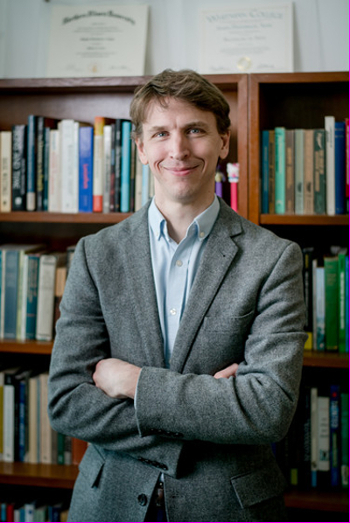
2026 has proven to be transitional year for Purdue Philosophy. With our former department head Chris Yeomans commencing his new role as the Justin S. Morrill Dean of the College of Liberal Arts, I have stepped up into the head position (with some very big shoes to fill!). And this year has already been one of many sad goodbyes. Our longtime colleague Bill McBride, who taught at Purdue for over 50 years, passed away in April. Two absolutely stalwart members of the department are moving on: Vickie Sanders and Professor Jan Cover have retired in May. The two of them combined have contributed nearly 75 years of service to Purdue, and have left their mark on the department and all the many people who have passed through our classrooms and offices over the years. We wish them the very best as they move into the next phase of their lives. Finally, Professor Lea Schroeder will be leaving to take up a position at UC-Berkeley this coming fall. We wish her the best of luck on this next step of her career.
But with changes come new opportunities. We are delighted to welcome Dr. Adam Waggoner to the Purdue faculty, starting in Fall 2027. Dr. Waggoner is currently a post-doctoral researcher at Purdue, and will continue in that position for the coming academic year before he transitions into his professorial role. In the fall we welcome back to campus Dr. Jeff Bulington, an alumnus of our program who will be teaching an innovative course on the Philosophy of Chess, and working to build new chess programs within the local schools. Our department continues to enrich and expand our academic offerings. Our new degree in Cognitive Science will hit the ground running in the fall semester, as it joins our other two undergraduate degree programs (Philosophy and Artificial Intelligence), which are larger and stronger than they have ever been.
I’m also so pleased to share our department’s pride in the recent launch of CAIC—the Cognition, Agency, and Intelligence Center led by Professors Dan Kelly and Sarah Robins. The Center is a truly interdisciplinary hub for research into the cognitive sciences that has fast been gaining attention around the university and beyond. Anywhere from university heads’ meetings to the bleachers at the local little league fields, faculty from across the different colleges have been approaching me about CAIC, wanting to know more and how to get involved.
Finally, congratulations to all of our 2026 graduates, our newest class of Purdue Philosophy alums! We hope your time at Purdue has been transformative, and we want to hear all about how your newfound set of philosophical skills and knowledge is making an impact on your life and all your new adventures. Keep in touch!
Faculty Spotlight:
Duane Davis
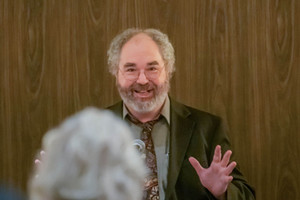
Dr. DUANE H. DAVIS is Professor Emeritus of Philosophy at the University of North Carolina at Asheville. He was a Distinguished Scholar in Residence in Curitiba, Brazil, in 2011, and the Ruth and Leon Feldman Research Scholar in 2013-14. He served as Assistant Director of the annual meeting of the International Merleau-Ponty Circle in 1990, and Director in 2001 and 2010, and, with Ivan Kolev, co-directed a conference commemorating the hundredth anniversary of Merleau-Ponty’s birth in Sophia, Bulgaria, in 2008. He has published numerous articles in recent French thought, is co-editor (with William Hamrick) of Merleau-Ponty and the Art of Perception (SUNY Press, 2016) and is editor of Merleau-Ponty's Later Works and Their Practical Implications: The Dehiscence of Responsibility (Humanity Books, 2001). He is currently working on two book projects: Reversibilities of the Flesh (exploring the provenance, promise, and peril of Merleau-Ponty's notion of reversibility); and Repairing the Flesh of the World (exploring Achille Mbembe's political appropriation of Merleau-Ponty's ontology).
Alumni Spotlight
Catherine Nowak, BA 2022

Catherine Nowak is building an impressive career at the intersection of law, business, and sustainability. Currently an ESG (Environmental, Social, and Governance) Paralegal on the Global Legal team at McDonald’s Corporation, Catherine also balances her professional role with being a part-time evening student at the University of Illinois Chicago School of Law, where she is pursuing her J.D.
Catherine participated in Purdue University’s Degree in 3 program and graduated in 2022. After graduation, she began her career in private practice at a civil litigation law firm while earning a Litigation and Corporate Practice Certificate in Paralegal Studies from Loyola University Chicago. After nearly two years, she transitioned to McDonald’s as a Legal Assistant on the Corporate Securities and Governance team and was promoted to her current ESG Paralegal role this past summer. She has now been with the company for two years. Outside of work and school, Catherine enjoys attending concerts, exploring Chicago, planning travel itineraries, and staying active.
https://www.cla.purdue.edu/academic/philosophy/students/alumni/alumni.html
What our students are up to!!
Gavin Foster
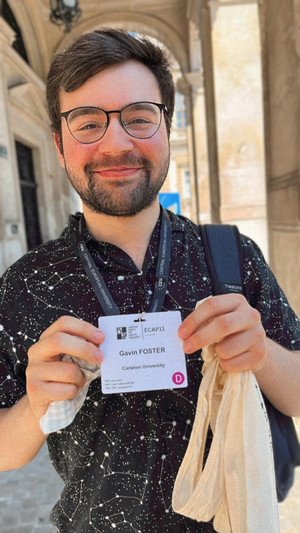
Gavin is a second-year PhD student in the philosophy department whose research focuses on the philosophy of animal minds, particularly the evolutionary origins of theory of mind. He also has interests in developmental psychology, Kant, and the history of biology. He is actively working on the evolutionary roots of norm psychology, how children come to engage in moral reasoning, and whether a Kantian-inspired account of autonomy can be the foundation for a bounded, inquiry epistemology.
In Fall 2025, Gavin published his first paper in Philosophical Psychology, titled “From Monkeys to Infants: The Empirical Challenges Facing Mental Fictionalism.” He also recently published (with Amalia Bastos, Patrick Wood, and Christopher Krupenye) a comparative psychology paper, “Do Dogs Rationally Infer the Causes of Failed Actions?” in PLoS ONE, and co-authored a review of Emma Borg’s Acting for Reasons: In Defence of Common-Sense Psychology with Evan Westra in Mind.
This semester, Gavin has been working on a new paper entitled “The Pluralistic Evolution of Factive Mindreading.” He presented this work through a PROMISE grant at the “Animal Minds: New Theories and New Observations” workshop at Ruhr-University Bochum, and also at the Southern Society for Philosophy and Psychology in Atlanta, Georgia, where he was awarded a Graduate Student Award. He will also be presenting this research at the International Conference on Comparative Cognition (CO3) in Montreal. He will also be presenting his work at the Canadian Philosophical Association in Halifax this summer.
Carina Crisan
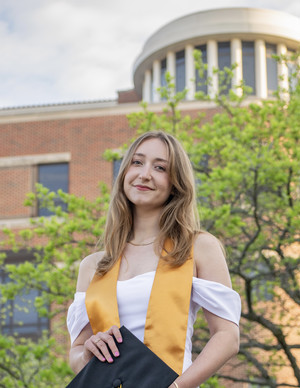
Carina Crisan is a master's student in the philosophy department and a recipient of the Puskas Memorial Fellowship for the 2026-2027 academic year. This faculty-nominated fellowship is awarded to graduate students who, in addition to outstanding academic performance, have a significant relationship with Romania. Apart from being Romanian by nationality, Carina has maintained strong cultural and formal ties to Romania throughout her life. The Puskas fellowship will support her research, primarily situated in the philosophy of cognitive science and memory.
Congratulations to our Graduates!!
B.A. Artificial IntelligenceRixin Chen
Samuel Defoe
Manas Jha
Nishitha Pelaprolu
Zachary Pitroda
Vedant Thakur (accepted a position at Chewy.com and has been accepted to Berkly Law)
Aaron Zou
B.A. Philosophy
Mohana Barve (accepted to master’s program at George Washing University)
Elliot Brajkovich (accepted to PhD program at the University of Illinois Urbana-Champaign)
Junan Chen
Alyssa Desharnais
Elisabeth Dunch
Jack Fellmy
Elias Frank
Riley Freck
Dakota Griswold
Evan Gutierrez
Charlotte Harmon
Hannah Huemmer
RCAC Students
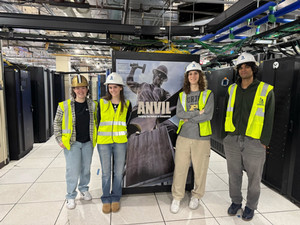
Purdue students in the BA in Artificial Intelligence program are gaining hands-on experience with the technologies shaping tomorrow. During a recent visit to the Rosen Center for Advanced Computing (RCAC), students in the AI Strategy & Impact Practicum explored advanced data systems and immersive tools like CollabXR. Experiences like this highlight how Purdue continues to connect classroom learning with real-world innovation—preparing the next generation of leaders in AI and beyond.
Click here to learn more
Exploring the Mind: Purdue Launches New Cognitive Science Program
Purdue University’s new Bachelor of Arts in Cognitive Science offers students an exciting, interdisciplinary path to explore how the mind works. Housed in the College of Liberal Arts, the program brings together philosophy, psychology, computer science, linguistics, biology, and related fields to examine key questions about perception, learning, memory, language, and decision-making.
Through a blend of classroom learning, research opportunities, and hands-on experience, students gain a strong foundation in understanding both human and artificial intelligence. The program also prepares graduates for a wide range of careers in areas such as technology, healthcare, education, UX design, and research, as well as for continued study in graduate or professional school.
This innovative major reflects Purdue’s commitment to interdisciplinary learning and equips students with the critical thinking and problem-solving skills needed to engage with the rapidly evolving landscape of cognitive science.
Please use this link to find out more about the program.
Colloquium Speakers
As the spring semester wraps up, we’re grateful for the privilege of hosting an extraordinary group of scholars whose work spans some of the most exciting areas in contemporary thought. Each guest brought a distinctive perspective, helping us explore big questions about knowledge, society, truth, and the human mind.
We began the semester with Hrishikesh Joshi from the University of Arizona. He discussed how many political philosophers have emphasized that universal suffrage, by itself, is not enough to underwrite democratic legitimacy.
Next, Alisabeth Ayars of Washington University taught us that affective experience is often compared to perception because both offer ways of interpreting the world that we can potentially resist. However, they differ in how easily we can distance ourselves from them. Perceptual illusions, like the Müller–Lyer illusion, can be fully “bracketed” once we know they are misleading, allowing us to treat them as mere sensory outputs. In contrast, recalcitrant emotions—such as fear that persist despite knowing there is no danger—continue to exert pressure on our beliefs and demand a response. As a result, emotions cannot be fully detached from perceptions in the same way, highlighting a key asymmetry that the paper aims to explain.
We then welcomed Jens Timmerman from the University of St. Andrews. Jens Timmerman explains that in Critique of Practical Reason, Kant shifts away from the earlier Groundwork project of justifying morality through the concept of autonomy. Instead, Kant presents the moral law as a given, calling it the “fact of pure reason.” This has led some readers to worry that Kant abandons justification in favor of dogmatism. Timmerman argues, however, that Kant is still engaged in a form of justification, even if it differs from his earlier approach. While this later project does not amount to a full “deduction” by Kant’s own standards, it still offers a meaningful defense of moral principles.
Leonard Lawlor, Penn State, defined Bergson’s thought as a kind of anti-Kantianism. Bergson argues that Kant limitation of experience to finite experience blocks us from reaching the absolute. In contrast, for Bergson, there is a different experience—intuition—which grants us access to the absolute. Bergson shows how to reach the absolute through certain images, which I examine at the end of the essay.
Later in the semester, Derk Pereboom engaged us with Susan Wolf’s defense of “angry blame,” agreeing that such blame in close relationships doesn’t necessarily damage them, though he urges caution in its use. Drawing on views from Manuel Vargas and Samuel Reis-Dennis, he supports the idea that blame is justified not by desert but by its role in maintaining social balance. Pereboom argues that while expressive, anger-driven (“Italian-style”) blame can sustain one kind of social equilibrium, other, less volatile forms of blame can also work effectively. These alternatives may reduce the costs associated with anger while preserving accountability through different norms and social roles. This pluralistic view challenges the more universal account of responsibility associated with P. F. Strawson.
Thank you to our speakers, attendees, and organizers for making this a rich and rewarding semester. We look forward to continuing these conversations and welcoming more voices
Center Spotlight: Purdue’s Cognition, Agency, and Intelligence Center (CAIC)
This year saw the founding of Purdue’s new Cognition, Agency and Intelligence Center (CAIC, pronounced “cake”), whose mission is to help grow interdisciplinary research in cognitive science. The center, led by co-directors Sarah Robins and Daniel Kelly, both professors in the philosophy department, was signed into existence in July 2025. With the help of CAIC post-doctoral researcher Danielle Williams, the center hosted its first big public event in April, the Interdisciplinary Conference in Cognitive Science.
The conference was held over two days in the Purdue Memorial Union. It featured world-renowned speakers from the fields of philosophy, psychology, neuroscience, and computer science. Nearly 200 people registered for the event, and there were steadily 75-100 in attendance across the two days. Attendees came from 25 disciplines at Purdue, including faculty and students from Psychology, Linguistics, cognitive science, Health and Human Services, Anthropology, Computer Science, Neuroscience, Engineering, Biological Science, and Philosophy. The event also drew in attendees from IU Bloomington, the University of Michigan, Purdue Indianapolis, and Purdue Fort Wayne. The conference showcased the range of what cognitive science investigates. Talks focused on the character of the intelligence exhibited by Large Language Models, learning and the emergence of social norms in human populations, the nature of collective intelligence, agency and dynamical systems, and the gamification of meaning and purpose. As Shaun Nichols (philosophy, Cornell University), a speaker at the CAIC conference and this year’s Scholl Lecturer remarked, “One of the things that became evident over the last couple of days was that it’s a great thing about cognitive science that we are working on so many different problems… that we work on from multiple perspectives… and there is so much opportunity for growth. CAIC is such a good idea for trying to pursue those things.”
As Robins and Kelly noted in their introductory remarks, CAIC plans to continue building on strengths that already exist at Purdue. Since the conference, they are working with CAIC affiliated colleagues to develop a strategic plan for the future. As Jenann Ismael, a philosopher of mind and philosophy of physics (Johns Hopkins University) whose talk investigated the underlying structure of choice, noted “disciplinary boundaries are unsustainable…in the maturity of any field that has questions that share boundaries with other fields… the fields need each other. What I’ve been really struck by over the last few days is that… no matter where your research is, you end up needing to ask questions about agency and mind.”
Events and Highlights
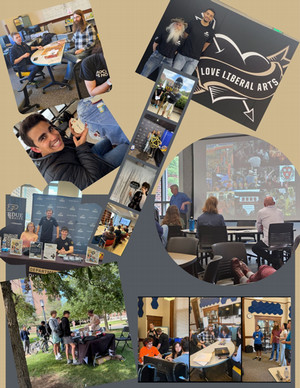
Game ON!! brought some seriously fun energy to campus with a full day of games, snacks, and community. Students gathered in the VRAI Lab (PFEN 103) from 10 AM to 4 PM—many showing up in costume—and made the most of a relaxed, welcoming space designed for hanging out and having fun.
In collaboration with the Purdue Board Game Club, attendees jumped into Mario Kart on the Switch, played a variety of card and board games, and enjoyed plenty of snacks between rounds. Whether stopping in between classes or staying for hours, everyone had a great time connecting, competing, and taking a well-earned break from the usual routine.
Wisdom Wednesdays have been a hit this semester!
Wisdom Wednesdays have been a real highlight this semester! Each week has brought strong attendance and engaging conversations as students and faculty come together to exchange ideas, connect, and share perspectives. And of course, no Wisdom Wednesday would be complete without coffee and donuts to keep the discussions going!
Our 2nd annual Spring Picnic was a great success and a fun break to finals! Students gathered to relax, enjoy hot dogs, and take a well-deserved pause from studying. The afternoon was filled with laughter and friendly competition over games like Connect 4 and cornhole, making it a great way to unwind and connect with friends in the midst of exams.
Check out our events page for more information
Faculty Corner
Patrick Kain – “Kant and The Origins of The Good Will.”
Kant and the Origins of the Good Will by Patrick Kain offers a detailed historical and philosophical study of the development of Immanuel Kant’s moral thought prior to the Groundwork. Drawing on newly available lecture notes, drafts, and early writings, Kain argues that Kant’s ethics is fundamentally rooted in a value-centered account of the good will and the dignity of humanity. The book reconstructs how Kant’s ideas evolved from the 1750s through the mid-1780s, highlighting the influence of concepts such as divine will, freedom, and moral value. It ultimately shows that Kant’s mature moral philosophy emerges from a long developmental process grounded in a robust conception of goodness rather than appearing suddenly in his later works.
Jacqueline Marina – “Kant’s Metaphysics of the Will”
In Kant’s Metaphysics of the Will (Cambridge University Press, 2025), Jacqueline Mariña argues that Kant’s account of morality, grounded in reason, is more robust than its critics allow. At a moment caught between nihilism and reaction, the book advances a compelling alternative: against both relativist views and reactionary attempts to ground morality in religion or tradition, it defends a universal moral law grounded in reason
Congratulations to Adam Waggoner on accepting a tenure-track position with the Purdue Department of Philosophy. He will continue his post-doc for 2026 – 2027 and start his professorship in August 2027.
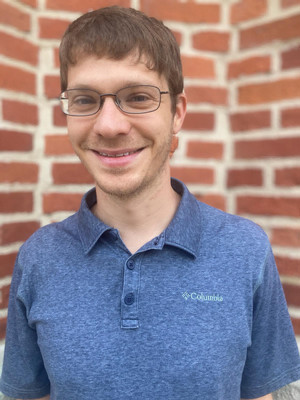
Congratulations to Pat Kain & Dana Tulodziecki on their promotion to Full Professor, effective August 2026.
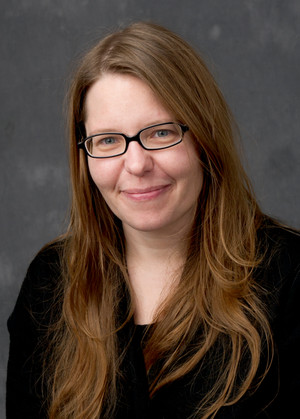
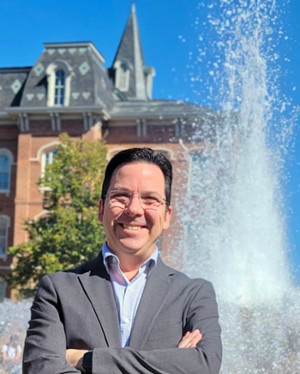
Retirement Announcements
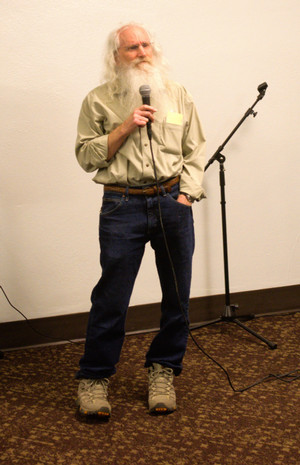
Professor Jan Cover officially retired at the end of this semester, concluding a remarkable career that has shaped the Purdue Philosophy community since 1988. Known to generations of students simply as “Cover,” he leaves behind a lasting legacy of rigorous scholarship, thoughtful teaching, and deep intellectual curiosity. The strong turnout at his retirement reception on April 15, 2026—bringing together current and former students, faculty, and administrators—spoke volumes about the impact he has had over the years.
Cover’s academic journey began with a B.S. in biochemistry and biophysics at UC Davis before he shifted paths to pursue philosophy at Syracuse University, where he earned his B.A., M.A., and Ph.D. His scholarly work spans early modern philosophy, metaphysics, and philosophy of art, with influential publications in leading journals and several co-authored and co-edited books on topics ranging from Leibniz to philosophy of science.
In the classroom, Cover was known for his dedication to careful thinking and his commitment to philosophy as an a priori discipline. His teaching and research explored figures such as Leibniz and Spinoza, as well as questions of causation, modality, and artistic representation. Even in retirement, he looks ahead to continuing his long-term projects, including a commentary on Leibniz’s Discourse on Metaphysics and reflections on portraiture and depiction.
Beyond his academic accomplishments, Cover often credits his upbringing—the son of a scratch-dirt farmer and Dunkard preacher—as foundational to his life and thinking. He also speaks with gratitude about his roles as a husband and father. His presence in the department will be deeply missed, but his influence will continue through the many students and colleagues he has inspired.
Vickie Sanders
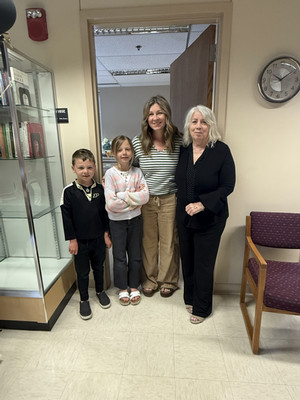
Over the past 22 years, one sentence has been uttered more than any other, in the environs of Purdue’s Department of Philosophy; one thought – said silently to oneself as often as directed aloud to someone else – has long been and remains still the most familiar, because most frequently voiced, among faculty and staff and grad students lucky enough to work up here on BRNG 7th floor. Hugely atypical for a great proportion of things said and thought, in the difficult business of philosophical reflection (and the management of its personnel), this one sentence, this one thought, has always been a safe bet – indeed no bet at all. It always was, and is, true.
“Ask Vickie: she’ll know.”
Vickie Sanders began working at Purdue in 1989 in the School Mathematics and Science Center (School of Education), and before long moved up to work for Associate Dean Richard Lesh. In 2004 Vickie moved – up, again – to Philosophy, as Department Head Secretary to Professor and Head Rod Bertolet. Three department Heads later, most recently Chris Yeomans and now Jamin Asay, Vickie Sanders will retire as Assistant to the Head in Philosophy in early May 2026.
It is impossible to estimate the wealth of Vickie’s savvy, technical proficiency, knowledge of academic programs, familiarity with (arcane, sometimes baroque) operational protocols, and general institutional memory. She always knew what to do, and inevitably offered to do it even when it wasn’t her job to do. For 22 years Vickie has – more often than not quietly, and always with more patience and grace than we deserved – literally held this place together. It would be an obscene understatement to say that she will be missed; the language of “irreplaceable” is not hyperbole. And we shall all be reminded of how much she meant and means so us, as we catch ourselves still so often thinking and saying “Ask Vickie: she’ll know”. From the bottom of our hearts we say “Thank you, Vickie” – and sincerely wish her the best of restful and rewarding days in retirement that she so much deserves.
In Memory of a Valued Scholar
We are saddened to mark the passing of William (Bill) McBride, who died on April 10 at the age of 88, surrounded by his family. Bill was a bedrock member of the Philosophy faculty for over 50 years, teaching countless numbers of students, supervising myriad graduate dissertations, and developing his own professional career. Bill authored eight books, edited several more, and was the author of dozens and dozens of articles. Bill earned his Ph.D. at Yale, where he began his professional career before moving to Purdue in 1973. In his time at Purdue, Bill co-founded the Sartre Society of North America, chaired the Purdue Senate and Purdue’s chapter of the American Association of University Professors, and was one of the founders of Women’s Studies at Purdue. Bill touched the lives of so many people reading this newsletter, and he will be deeply missed.